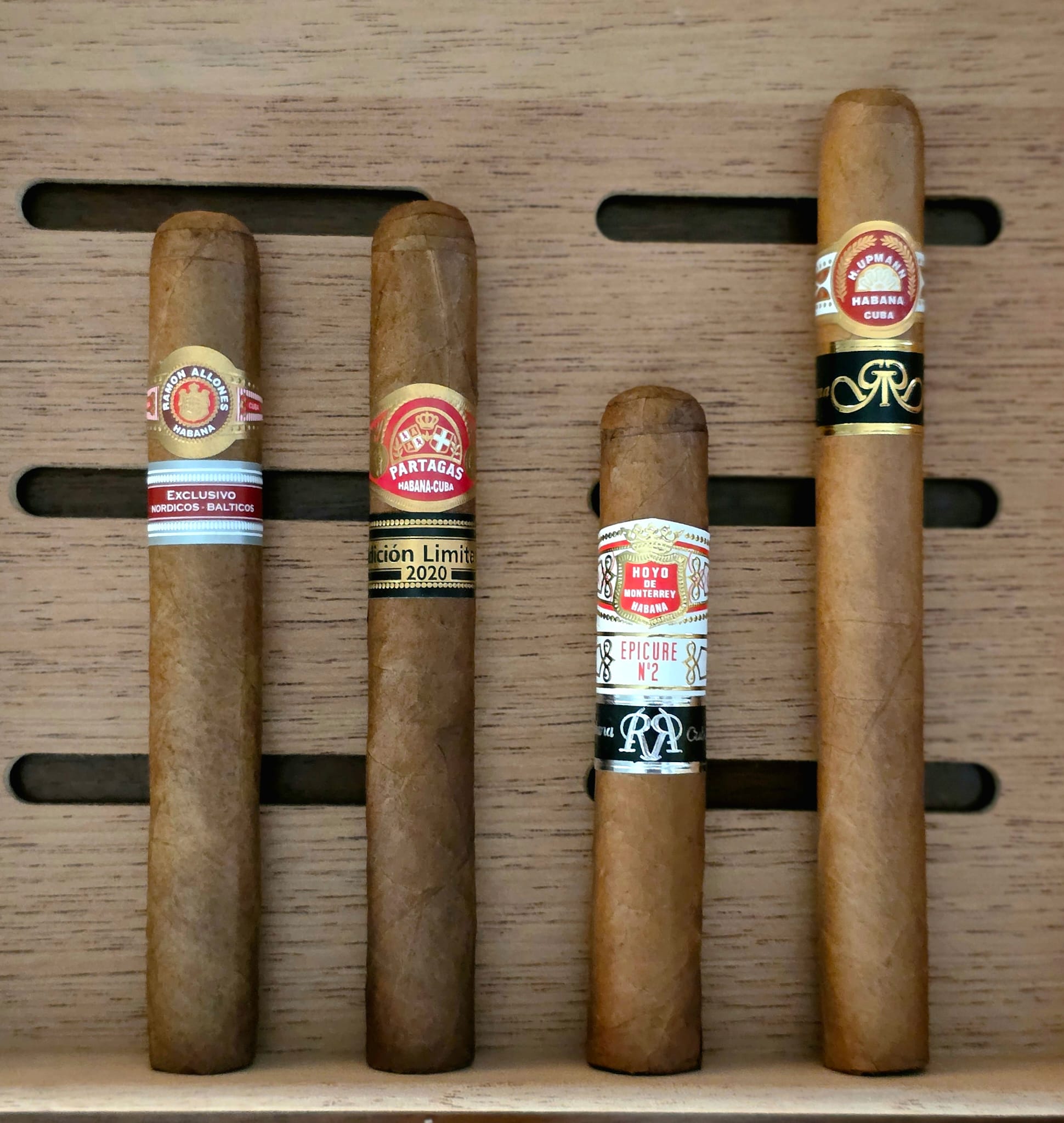
Walk into a serious La Casa del Habano in Madrid, Vienna, or Havana, ask for the “special releases” cabinet, and you will be shown four distinct kinds of cigar: an Edición Regional with a burgundy-and-silver secondary band, an Edición Limitada in black and gold, a Reserva in a numbered black lacquer box with silver script, and a Gran Reserva in the same lacquer with gold script. The bands are designed to look related. The cigars inside them are not particularly related at all.
Each represents a separate Habanos S.A. program with different aging requirements, different production volumes, different selection criteria, and different price ceilings. Knowing which is which is the difference between paying a smart premium for cigars that genuinely justify the cost and overspending on a tier that’s marketed harder than it’s built.
Here is how the four programs actually work, and which ones I would tell a friend to chase.
Edición Regional: the locals-only releases
Habanos S.A. launched the Edición Regional program in 2005. The first release was the Ramón Allones Belicosos Finos, produced exclusively for the United Kingdom market through Hunters & Frankau. The program’s premise was straightforward: give country distributors and large regional markets the right to commission cigars that would never be sold anywhere else.
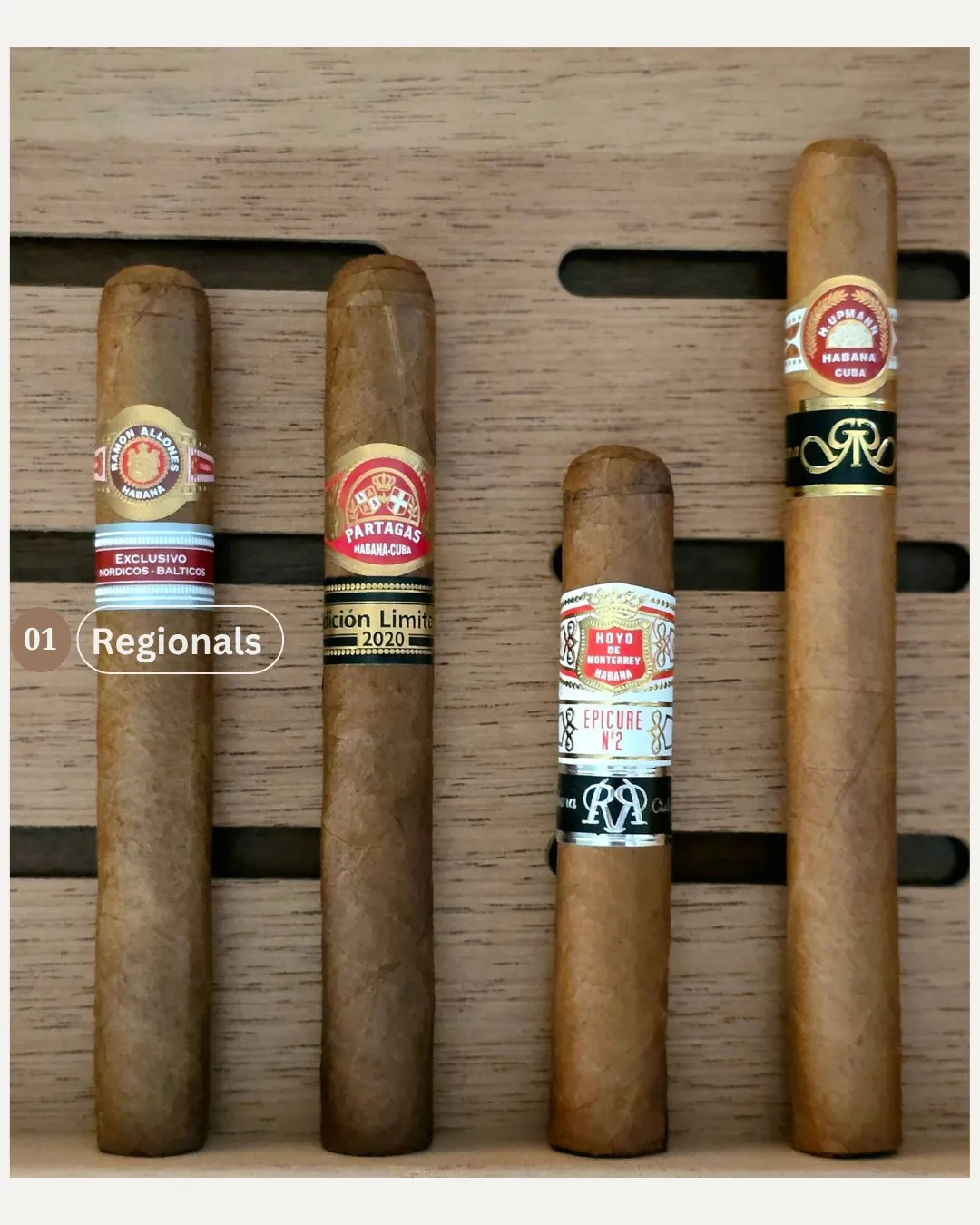
Two structural rules shape every Regional. First, they are produced from one of Habanos S.A.’s smaller brands — Por Larrañaga, Quai d’Orsay, Vegas Robaina, Rafael González, Saint Luis Rey, Ramón Allones, and the like. The flagship brands (Cohiba, Montecristo, Romeo y Julieta, Partagás) are excluded from the program. Second, the vitola has to be a size not already produced by that brand in standard production. The combination forces the regional to be genuinely distinctive: a smaller brand presented in a size that brand has never produced before.
Production volumes are tight — typically 2,500 to 5,000 boxes — and distribution is locked to the commissioning region. A cigar made for Germany (“Exclusivo Alemania”) will technically not be retailed anywhere else, though they trickle through secondary markets within months of release.
Editorial take: Regionals are the most interesting cigars in the Habanos catalog right now. The pricing premium is moderate (typically 20-40% above standard releases of comparable size), the blends are often more adventurous than the flagship brands’ core lines, and they are the closest thing the Cuban industry has to a craft-brewery release model. The catch is geographic exclusivity — buying outside your commissioned region usually requires LCDH-store relationships or secondary-market dealing. The cleanest way in is to know the Hunters & Frankau team if you’re UK-based, or the equivalent national distributor for your country.
Edición Limitada: the annual flagship release
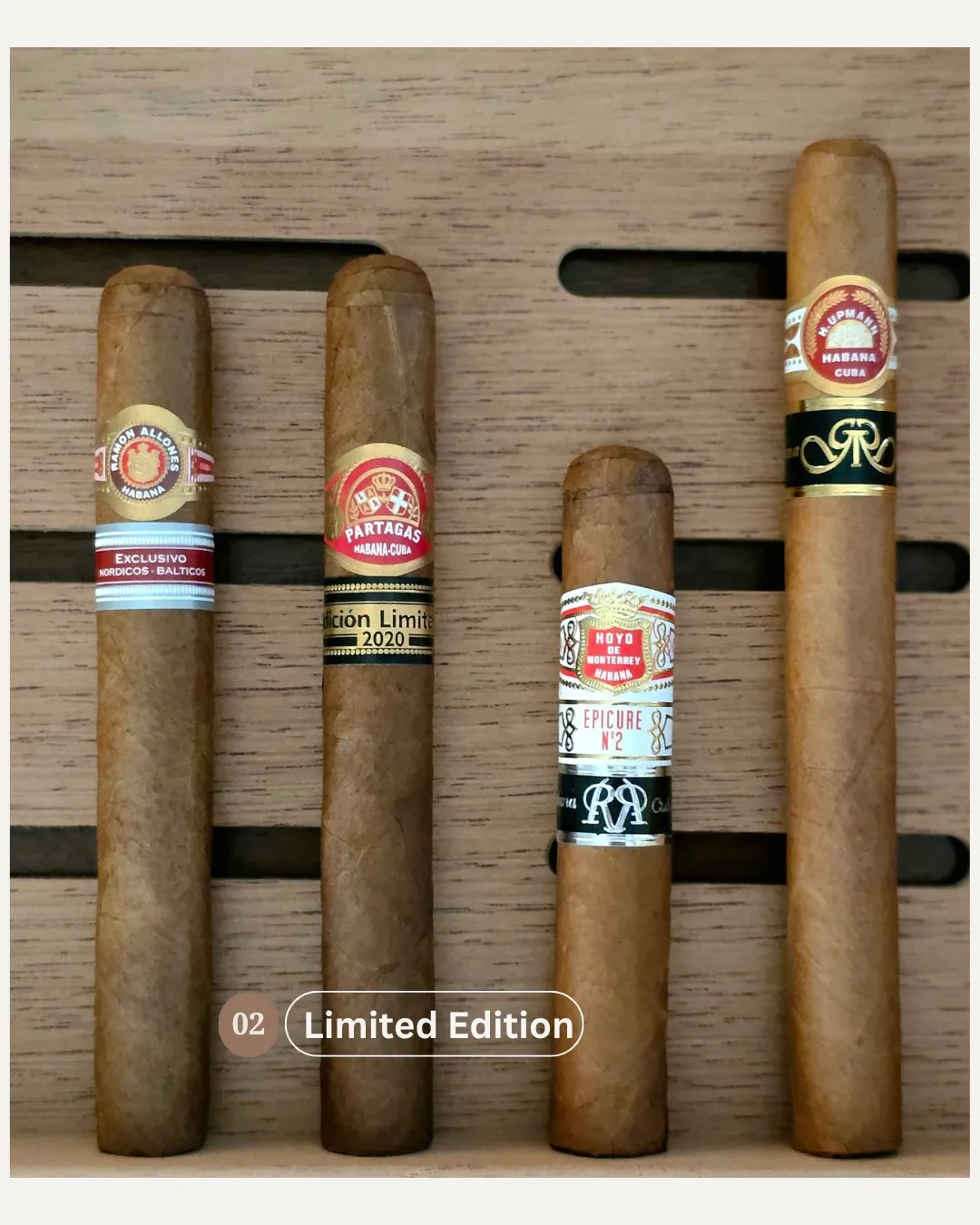
Edición Limitada is the program Habanos S.A. launched in 2000 and has run continuously since. Three Limited Edition cigars are released globally each year, each from a different major brand, each in a vitola not available in that brand’s standard production. The 2024 trio included the Cohiba 55 Aniversario, the Montecristo Wide Edmundo, and the Bolívar Mariposas.
The defining technical feature of an EL is the wrapper. Limited Edition wrappers come from the upper primings of the tobacco plant — the leaves higher up the stalk, which receive more sun, develop darker color, and carry more oil. All three tobacco components (filler, binder, wrapper) are aged for a minimum of two years before the cigar is rolled. The resulting flavor profile is typically darker and more intense than the brand’s standard production — closer to maduro in body, with the sweetness that aged ligero (the topmost leaves) tends to develop.
Bands are black with gold script, marked “Edición Limitada” and the year. Boxes are matte black with the same gold treatment.
Editorial take: ELs are the most consistently good Habanos release year-over-year. They are not always the most exciting — the program’s two-year minimum aging is below what Reserva and Gran Reserva require — but they are reliably well-blended and represent the major brands working with their best leaf. The pricing has crept up over the last five years; current ELs run €25-60 per stick at LCDH retail, with the Cohiba editions reaching €100+. For aficionados who want to buy one new Habanos release per year and know it will be worth the money, the EL trio is the safe pick.
Reserva: the three-year aged version
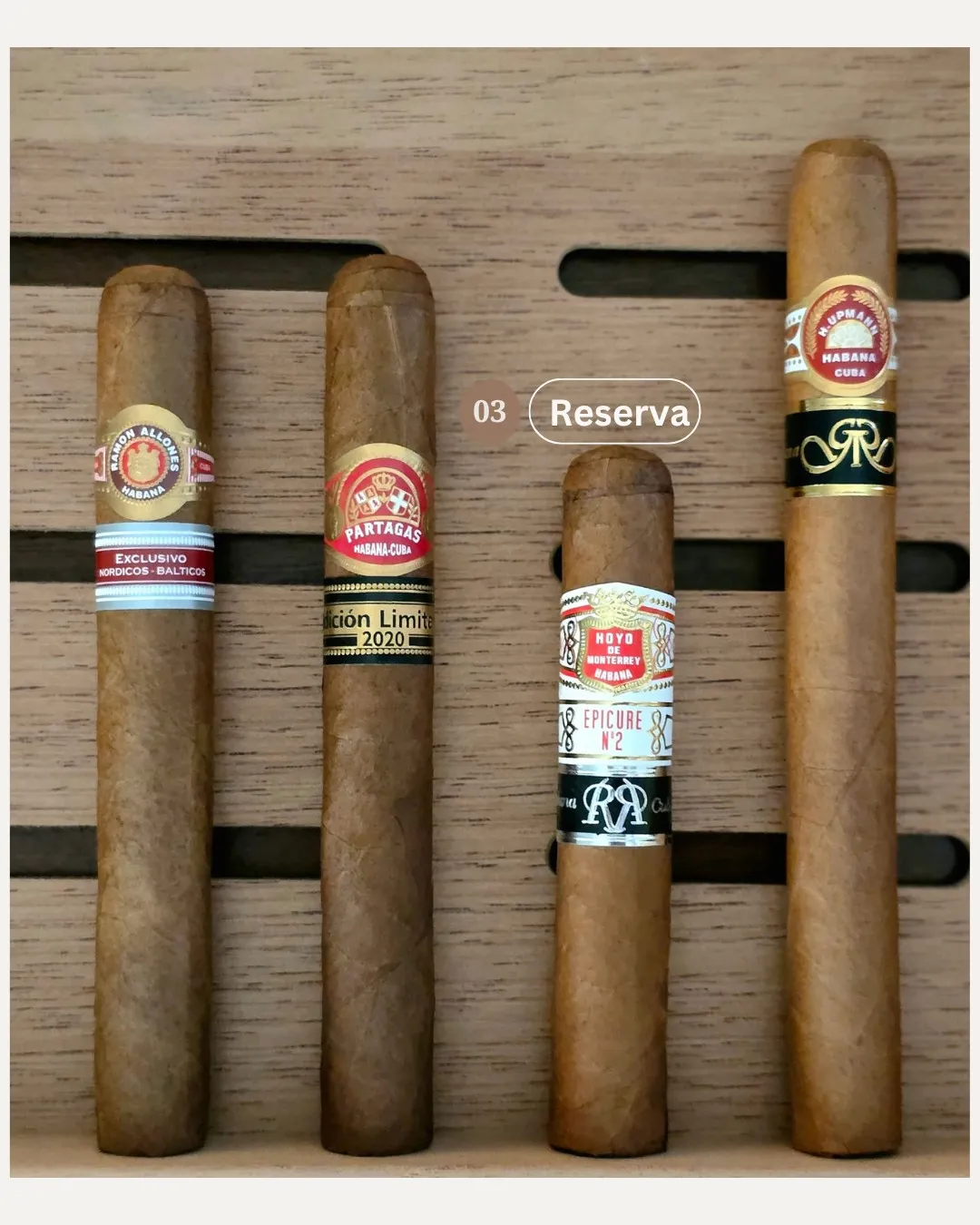
The Reserva Cosecha program launched in 2003 with the Cohiba Selección Reserva — a box of 30 cigars rolled exclusively from leaf harvested in the 1999 cosecha (vintage). The program established a new tier above Edición Limitada: a Reserva takes an existing, standard-production cigar from a major brand and produces a version where all tobacco is aged a minimum of three years before rolling.
The aging matters more than the marketing suggests. Tobacco at three years has lost the harshness of young leaf entirely. The chemistry has settled. The volatile compounds that produce sharp or grassy notes have evaporated. What remains is the deeper structural flavor of the leaf — the elements that make Cuban tobacco distinctive in the first place. A Reserva version of a cigar you already know in standard production reads as a more polished, more integrated, but unmistakably the same blend.
Reservas are released in even-numbered years (2018, 2020, 2022, 2024), typically one or two per year, in numbered boxes of 20 or 30 sticks. Recent examples include the Romeo y Julieta Wide Churchill Reserva Cosecha 2018, the Partagás Lusitania Reserva Cosecha 2020, and the H. Upmann Sir Winston Reserva Cosecha 2022. Packaging is matte black with silver script and individual box numbering.
Editorial take: Reservas are excellent cigars and an overpriced product category at current rates. At €30-70 per stick depending on vitola, you are paying a 200-300% premium over the same cigar in standard production, in exchange for tobacco that’s been aged three years rather than the standard one. For collectors and gift buyers, the box presentation justifies the spend. For working aficionados smoking the cigar tonight, a six-year-old box of standard production sitting in your home humidor will outperform a freshly-released Reserva at a fraction of the cost.
Gran Reserva: the five-year aged version
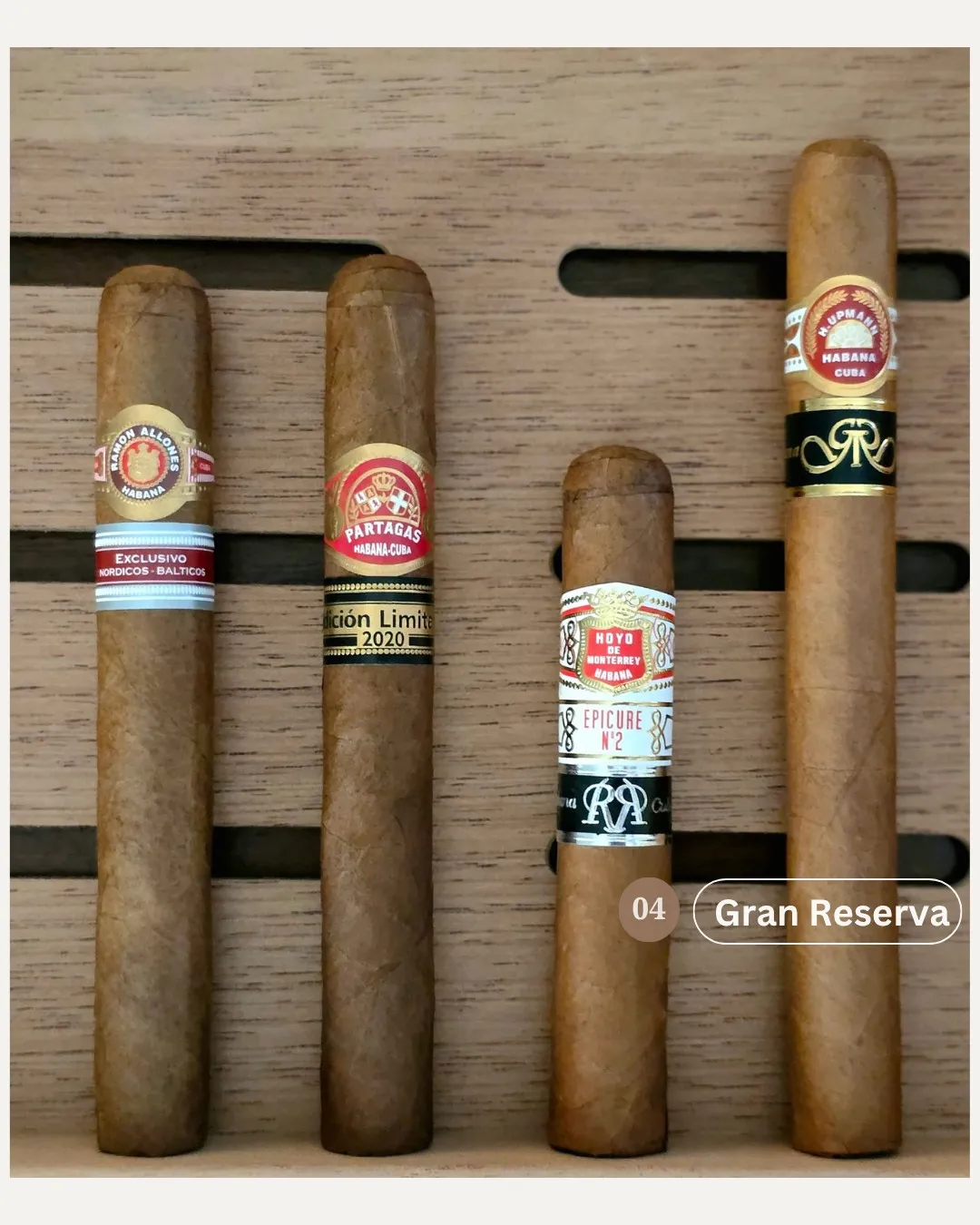
The top of the Habanos program tier. Launched in 2009 with the Cohiba Gran Reserva Cosecha 2003, the Gran Reserva sits structurally above Reserva: same concept (an aged version of a standard-production cigar), longer aging (minimum five years for all tobacco), even tighter production volumes, and exclusively the most prestigious vitolas of the most prestigious brands.
Cohiba dominates the Gran Reserva program. The Behike 56, Esplendidos, and Siglo VI have all appeared in Gran Reserva form. H. Upmann’s Magnum 46 and Sir Winston have also been selected. Outside those, the program is selective to the point of being almost a deliberate scarcity strategy.
Gran Reservas release in odd-numbered years (2019, 2021, 2023, 2025), alternating with the Reserva cycle, and are typically timed to coincide with the Festival del Habano in late February. Boxes carry gold script on black lacquer. Pricing routinely exceeds €100 per stick.
Editorial take: Gran Reservas are genuinely exceptional cigars and a luxury market product first. The aging is real, the leaf selection is strict, and the flavor profile at five years’ rest is meaningfully different from the same blend at one year. But at €100-250 per stick, the comparison set is no longer “the same cigar at standard production” — it’s “any cigar at any price.” For most aficionados, a Gran Reserva is a once-or-twice-a-year purchase. For collectors, it is the cigar to be aging deliberately in the humidor for another five years on top of the factory aging. The serious play is buying a single box, smoking one stick now, and putting the remaining 19 down for a decade.
How to spot value across the four programs
A few honest assessments after a decade of buying across the programs:
Best value tier: Edición Regional. Distinctive blends, moderate premiums, genuine market scarcity.
Most reliable tier: Edición Limitada. Released every year, consistent quality, real wrapper selection.
Most over-marketed tier: Reserva. Good cigars, large premium, much of the effect replicable by aging standard production at home.
Top-tier collector pick: Gran Reserva. Expensive, exceptional, and the one program where the price is reasonably defensible against the product in the box.
The other variable worth considering is where you buy. All four programs are released through the LCDH network and authorized Habanos Specialists first, with allocations flowing to the broader retail trade second. If you want first pick on a release, your relationship with a specific LCDH store matters more than which country you live in. For trips to Cuba specifically, our Havana LCDH guide covers where to find these releases on the island.
The secondary band is doing real work
Across all four programs, the secondary band is not a marketing affectation. It signals a different production process, a different aging window, and a different blend strategy than the brand’s core line. The premium is real because the input is real. The question for a serious buyer is not whether these programs justify their existence — they do — but which of the four matches the way you actually smoke. A buyer who finishes one cigar a week and rotates through ten countries’ releases per year wants Regionals. A buyer who smokes the same Sir Winston three times a month wants standard production at six years’ age. A collector wants Gran Reservas in their original boxes.
Pick the program that matches your humidor. The bands are designed to look interchangeable. The cigars inside are not.