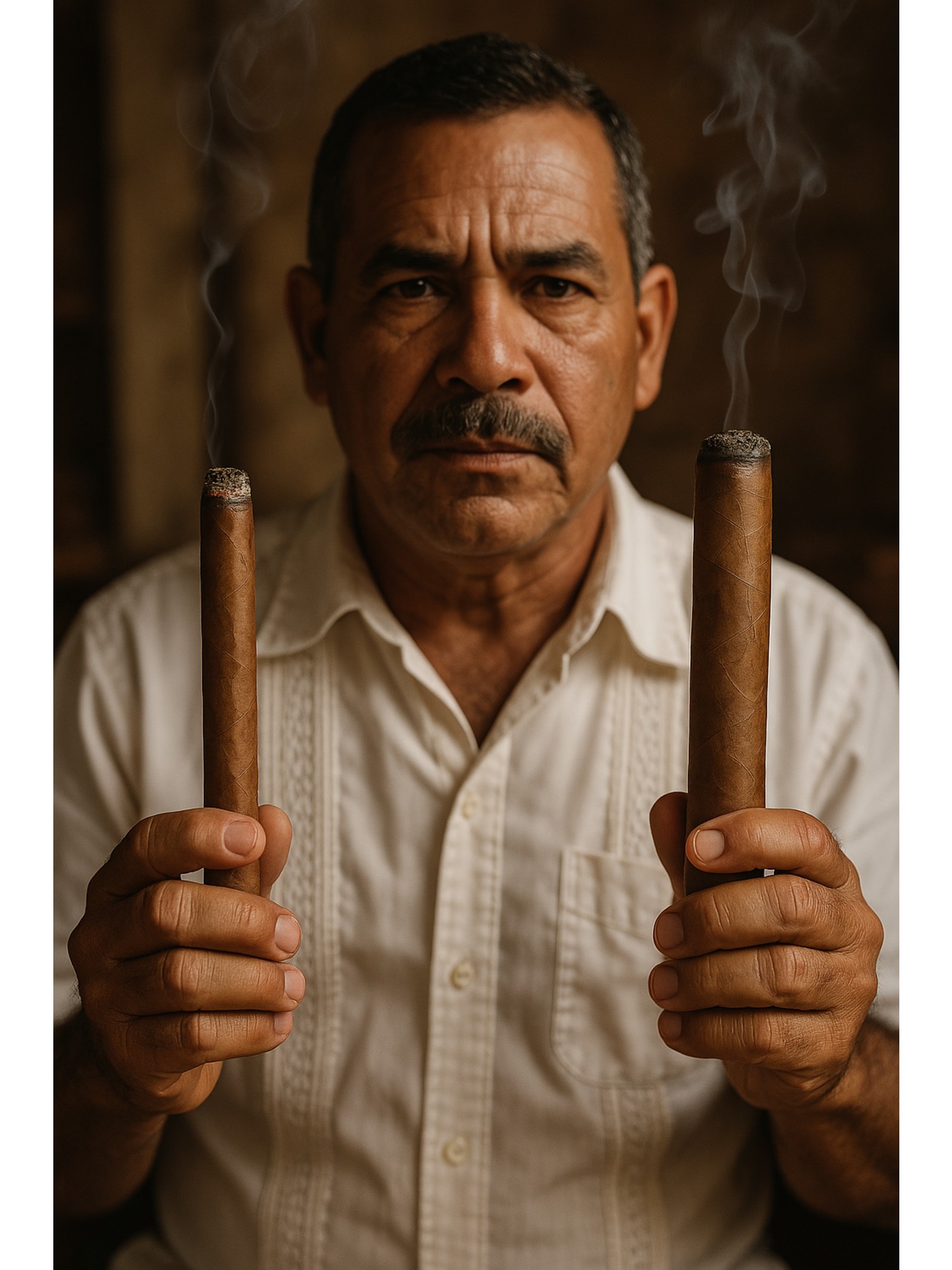
A premium cigar humidor in 2026 looks different from one in 2006. The Lonsdale that anchored the classic Cuban range — 6.5 inches by a 42 ring gauge — is now a niche format you have to actively look for. The Corona, the format that defined Cuban cigar production for most of the twentieth century, has been quietly retired from large parts of the Habanos lineup. The cigars that have replaced them on the shelves are bigger, fatter, and in some cases dramatically so: the toro (typically 6 inches by 50–54 ring gauge) and the gordo (60+ ring gauge, in some lines 70+).
This is not a small drift in taste. It is one of the structural shifts in premium cigar production over the last twenty years, and it has changed how cigars are blended, how they are marketed, and how they are smoked.
This is what actually drove the shift, what the large ring gauges deliver that the smaller formats do not, and where the case for the older sizes still holds.
The market data behind the shift
The Habanos S.A. commercial vice president has, in repeated Festival del Habano addresses, confirmed that sales of 50+ ring gauge cigars now account for over half of the company’s total volume — a complete inversion of the 2005 pattern, when 42–46 ring gauge formats dominated. New World production has moved further still. The Cigar Aficionado tasting database shows the median ring gauge of reviewed cigars climbing from 47 in 2005 to 54 in 2020, with the trend accelerating since.
The retailer signal matches the production signal. Walk into any working US tobacconist and the fast-moving inventory is concentrated in the 50–60 ring gauge range. The boutique brands that have grown fastest over the past decade — Liga Privada, My Father, Crowned Heads, Warped — built their reputations on toro and gordo formats more than on traditional Cuban sizes. Even traditionally restrained European retailers report the same pattern: toros sell, gordos sell, classic Cuban sizes turn over more slowly.
E.P. Carrillo’s “Inch” series, with ring gauges running up to 70, is the most visible example of how far the format has moved. A decade earlier the 70 ring gauge would have been an oddity. In 2026 it is a legitimate, commercially successful format with multiple major brands producing in the range.
Why the format actually changed
Five forces are visible behind the shift, and they reinforce each other.
Smoking duration as the experience
The most-cited driver in cigar smoker surveys is duration. A toro delivers 60–90 minutes of smoking time. A gordo will run past 90 minutes routinely, and over two hours in unhurried conditions. A 42-ring-gauge corona, by comparison, runs 30–45 minutes. The modern premium cigar customer is, on average, smoking less frequently than the 1990s equivalent, and when they do smoke they want the session to last. The large ring gauges deliver that.
This pattern aligns with the broader shift in how premium cigars are consumed — fewer cigars per week, more deliberate occasions, longer time per session — that has reshaped retail in parallel. The “smoke once or twice a week and make it count” customer is the customer the industry has been optimised for since roughly 2015.
Blending latitude
The technical argument is the one that gets less attention and matters more. A larger ring gauge gives the blender more filler tobacco to work with — more leaves, from more primings of the plant, of more origins and aging levels. The toro can carry a multi-origin blend (Nicaraguan, Dominican, Honduran, with a Connecticut or Ecuadorian wrapper) in a way the corona format cannot. The wrapper’s flavour contribution, which dominates the smaller formats, becomes one voice among several in the larger ones.
This is what allows the modern New World blending style to exist as it does. Crowned Heads’ La Imperiosa, Warped’s Flor del Valle, Liga Privada’s No.9 — these blends require a 50+ ring gauge to taste the way the blender intends them to taste. Compress them into a corona format and the wrapper takes over and the structure breaks.
A cooler, more voluminous smoke
The thermodynamics are real, not marketing. A larger ring gauge burns at a lower temperature at the coal because the heat is distributed over a larger cross-sectional area. The lower combustion temperature preserves more of the volatile aromatic compounds and reduces the harsh notes that come from over-rapid combustion. The cigar produces more smoke per draw, which the consumer experiences as more flavour intensity even when the underlying tobacco is the same. The reason the toro tends to “taste like more” than the corona of the same blend is, in part, this combustion physics.
The construction and draw economics
A well-rolled large ring gauge produces a more consistently good draw than a well-rolled small ring gauge — for the simple reason that there is more cross-sectional space for the filler to be bunched into. Rolling errors that produce a tight draw in a corona format can be invisible in a toro. This is one reason the format is easier for newer blenders and smaller boutique factories to produce reliably; it forgives the rolling inconsistencies that the smaller formats expose.
The caveat is that a poorly-rolled large ring gauge has its own failure modes — tunnelling, canoeing, uneven burn across the wider face. The torcedor skill required to roll a perfect gordo is, if anything, higher than for a perfect corona. The format is more forgiving of minor errors and less forgiving of major ones.
Perceived value and visual presence
The price-per-cigar at premium retail does scale with size, but not linearly. A toro of a given blend typically costs 15–30% more than the corona of the same blend, even though it contains 50–70% more tobacco. The “more cigar for the money” perception is real and has been the marketing teams’ messaging at most major brands. Combined with the simple visual presence of the format — a 60 ring gauge gordo looks substantial in the hand in a way that a 42 ring gauge corona does not — the value perception drives meaningful purchase behaviour.
The traditionalist case still has a defence
For all of the above, the case for the older formats is not wrong. It is a smaller market, but the underlying argument holds.
The corona format gives the wrapper its proper voice. If the blender’s intent is for a Cohiba Siglo II or a Partagás Lusitania to taste primarily of the Cuban wrapper, with the filler in supporting role, the corona format delivers that. The toro and gordo bury the wrapper under filler weight.
The shorter smoking session is a feature, not a bug, for the smoker who wants a 30-minute cigar with morning coffee, or after lunch, or in the brief window between meetings. Not every cigar should be a two-hour commitment.
And the traditional Cuban formats — corona, Lonsdale, panetela, lancero — were designed and refined over decades by master blenders working to balance the specific Cuban tobacco profile. The fact that the market has moved toward formats those blenders did not optimise for is a commercial choice, not a quality judgement on the cigars themselves.
For collectors thinking about the long view, the smaller formats are increasingly the vintage cigar category worth tracking. The Cuban coronas and Lonsdales that current production has marginalised will become the rarest, most documented historical formats in twenty years’ time. The market for them in 2046 is unlikely to look like the market for them in 2026.
What it means for the modern buyer
For buyers building a working collection in 2026, the practical answer is to own both. Stock the toros and gordos for the modern blending profiles that require them — most New World production from the past decade, most current Habanos S.A. releases including the Cohiba 60th anniversary slate, most boutique brand work. Keep coronas and Lonsdales in the humidor for the classic profiles where the wrapper carries the cigar and for the short-session moments the larger formats cannot fill.
The market has chosen the toro and the gordo as the default formats of modern premium cigar production, and that choice is sticky enough to define the next decade of the category. The traditional formats are the minority now. They are not gone, and the buyers who maintain a working knowledge of them — when to reach for a Cuban corona instead of a Nicaraguan gordo, and why — are the buyers who get the most out of the full range of what premium cigars actually offer.
For a deeper read on how format choice interacts with shade, shape and intent across the full Habanos lineup, our guide to cigar shape, size and shade walks through the working framework.
What’s in your humidor right now: more big-ring-gauge boxes than small? The market has been making that choice for you for a while.