Cigar Mold: What It Is and How to Get Rid of It
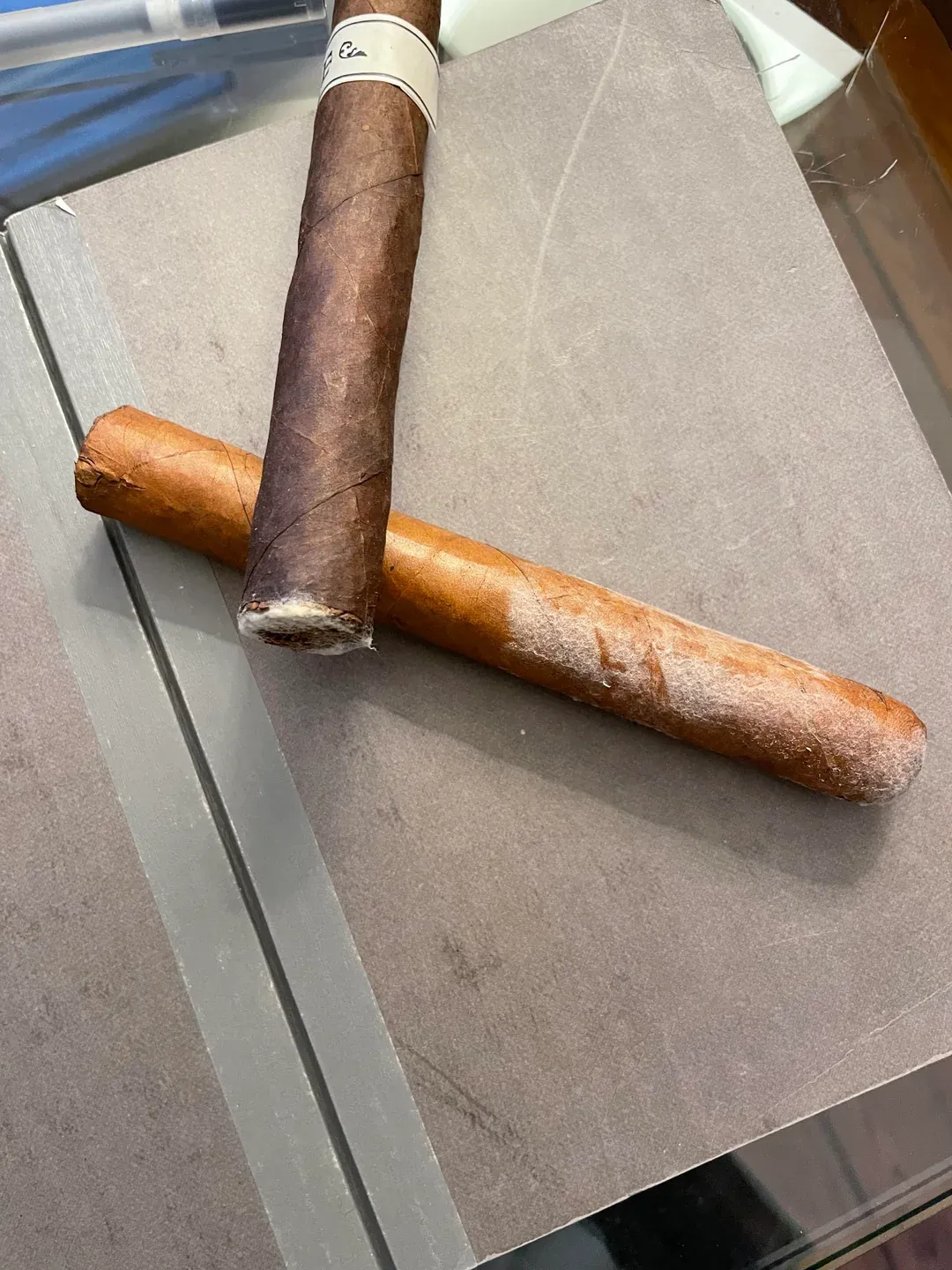
Cigar mold is a fungus that grows when cigars are exposed to excessive humidity or poor airflow. It typically appears as white, blue, or green fuzzy patches—not to be confused with plume, the harmless crystalline substance that forms as cigars age.
Moldy Cigars: How to Spot It, Stop It, and Save Your Stash
1. Mold vs. Plume Distinction
- The Traditional View: The long-held traditional view that plume (or “bloom”) is crystallized oils that migrate to the cigar’s surface, indicating proper aging.
- The Modern Scientific View: In recent years, multiple laboratory analyses commissioned by major retailers and cigar experts have concluded that what is called “plume” is, in almost all cases, simply a form of harmless, non-aggressive white mold. The crystalline appearance is just how this specific type of mold presents in its early stages.
What Is Cigar Mold?
Cigar mold is a fungus that grows when cigars are exposed to excessive humidity or poor airflow. It typically appears as white, blue, or green fuzzy patches—not to be confused with plume, the harmless crystalline substance that forms as cigars age.
Quick Test: Try brushing the spot lightly. If it comes off easily and feels powdery, it’s likely plume. If it’s fuzzy and penetrates the wrapper, you’ve got mold.
What Causes Mold on Cigars?
Mold forms when the humidity in your humidor exceeds optimal levels for extended periods. Here’s what usually triggers it:
- Humidity over 75% for prolonged periods
- Poor ventilation in the humidor
- Unclean storage conditions
- Direct contact with another moldy cigar
How to Detect Mold Early
You can spot mold if you pay close attention to:
- Discoloration: Unusual green or blue fuzzy spots
- Odor: Musty smell that overrides tobacco’s natural scent
- Texture: Sticky or soft patches on the cigar wrapper
Routine visual and sniff checks can go a long way in preventing a full-blown crisis.
Prevention Tips: Protecting Your Collection
Keep your cigars mold-free with these proven methods:
- Maintain RH levels between 65–70% with a reliable hygrometer
- Open your humidor weekly to refresh air
- Avoid storing cigars too close together
- Clean your humidor every couple of months with distilled water and a dry cloth
Bonus Tip: Use humidity beads or Boveda packs for consistent moisture control.
How to Handle Moldy Cigars
If you find mold, here’s what to do:
- Isolate affected cigars immediately
- Brush off minor surface mold with a soft cloth (only if it’s not deeply embedded)
- Deep clean your humidor to prevent future spread is crucial, but may require more than distilled water. A light wipe with a cloth dampened with high-proof isopropyl alcohol (which is then allowed to fully evaporate) is often recommended to kill remaining spores before re-seasoning the humidor.
When to say goodbye: If mold has spread inside the cigar or penetrated deeply into the tobacco, it’s best to discard it.
Can You Still Smoke a Moldy Cigar?
Technically, surface mold isn’t toxic. But let’s be real—smoking a moldy cigar is like drinking sour milk because it’s “still sorta cold.” If you value flavor and hygiene, it’s better to pass.
Filed under
Cigar 101