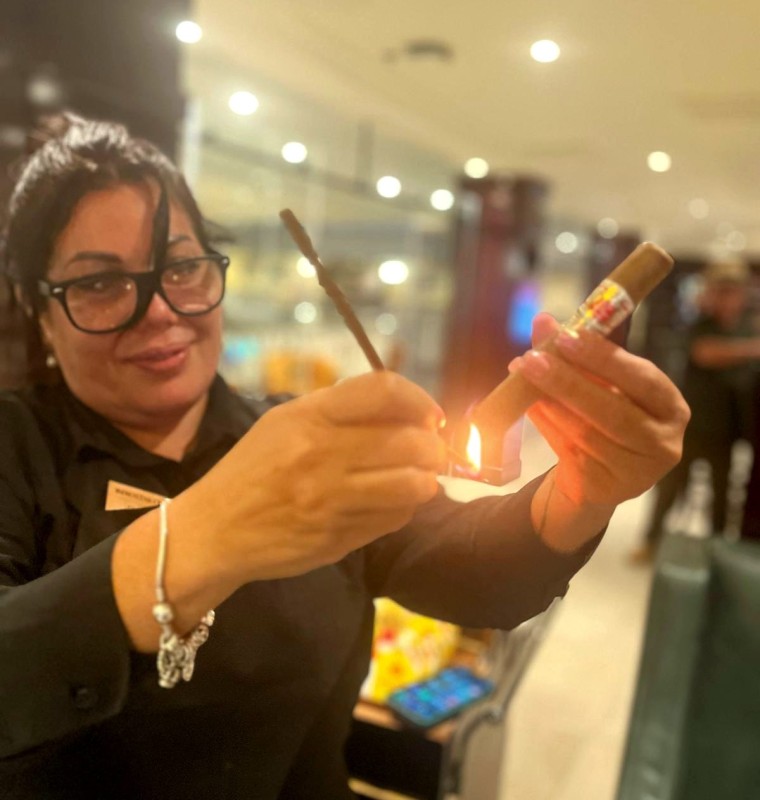
The first inch decides everything. Light a cigar right and the wrapper, binder, and filler combust at the same pace — the smoke comes through smooth, the ash holds together, and the flavor blooms over the next hour. Light a cigar wrong and you’ve already lost. The burn runs hot, one side tunnels, the binder splits, and you spend the next forty minutes correcting a mistake you made in the first thirty seconds.
This is the most under-taught skill in cigar smoking. The good news: it’s mechanical, not magical. Five minutes of attention now saves you years of mediocre smokes.
Why how you light a cigar matters more than you think
A cigar is three different tobaccos at three different moisture levels stacked on top of each other. The wrapper is silky and oily, the binder dense and waxy, the filler usually drier and looser. They don’t ignite at the same temperature. If you slam the foot into a flame, the wrapper catches first, the binder lags, and you’ve created an asymmetric burn that no amount of mid-cigar correction can fully fix.
The technique below works around that asymmetry by warming all three layers gradually before the actual ignition. It’s the same principle as preheating a pan before searing — patience at the start prevents bigger problems later.
What flame to use (and what to never use)
The flame matters as much as the technique. Three rules:
- Butane torch. Best option for 95% of situations. Clean, odorless, hot enough to ignite the foot evenly. A single-jet torch like the Xikar EX is the right answer for most cigars. For 60+ ring-gauge Gordos or windy patios, step up to a double-jet.
- Long cigar matches (the wooden ones, 4 inches or longer). Acceptable, but strike them and let the sulfur burn off for 5 seconds before bringing them anywhere near the cigar. The sulfur taste embeds into the wrapper if you skip this.
- Cedar spills. The traditional method — a thin strip of Spanish cedar lit from a candle or match, then used as a slow burning taper. Adds a subtle cedar note. Slow, theatrical, and worth doing once in a serious lounge.
What to never use: candles directly (the wax and wick chemicals taint the wrapper), Zippo or fluid lighters (lighter fluid leaves a kerosene aftertaste that lasts the entire smoke), and any flame from a chemical-tipped match. The flavors hide for the first puff and announce themselves on the second.
Step 1: Toast the foot
Hold the cigar at roughly a 45° angle, the open foot pointed down and slightly away from you. Bring the flame close — about half an inch from the tobacco — but never let it touch the wrapper. Rotate the cigar slowly like a rotisserie. You’re warming it, not lighting it yet.
What you’re watching for: a faint blackening around the rim of the foot, then a soft orange glow at the edge that appears even all the way around. This is the binder and filler reaching ignition temperature simultaneously. It takes 15 to 30 seconds depending on the ring gauge.
If you see one side glow while the other stays dark, slow down and rotate more carefully. That asymmetry now will compound into a canoe burn (where one side runs ahead) at the halfway point.
Step 2: Light with a slow draw
Once the foot is uniformly toasted, bring the cigar to your lips. Hold the flame about an inch from the foot — not touching — and draw gently while continuing to rotate. Two or three slow puffs should be enough. You’re feeling the smoke come through, not chugging.
Pull the cigar away from the flame and blow softly on the foot. The cherry should glow uniformly across the entire surface. If you see a dark spot, touch up with the flame for another second or two, rotating to even it out. This is normal — even experienced smokers touch up about a third of their lights.
Step 3: Verify the burn line in the first minute
The first 30 to 60 seconds tell you whether the light took. Smoke a few measured puffs and look at the burn line. Should be a clean, narrow ring of ash forming evenly all the way around. If one side is racing ahead, you’ve got asymmetric ignition — the wrapper or binder caught faster than the other.
Three fixes:
- Hold the flame against the slow side for a few seconds while rotating. Don’t try to “fix” the fast side; you can’t slow it down, only catch up the slow one.
- Blow gently on the slow side if it’s the wrapper that’s lagging — more oxygen, faster combustion.
- Accept it. Sometimes a cigar just burns asymmetrically because of how it was rolled. You can usually correct minor cases with the techniques above; bad ones are the Xikar XO cutter lesson — a clean cut starts every well-lit cigar.
The four mistakes that ruin every light
Every cigar smoker has made these. Stop making them:
- Direct flame contact. Charring the wrapper destroys flavor compounds and creates a bitter first inch that never recovers. The flame should hover; it never touches.
- Rushed toasting. Skipping the warm-up step is the single biggest cause of asymmetric burns. 20 seconds of patience saves 40 minutes of correction.
- Strong inhalation while lighting. You’re warming the foot, not vaping. Hard inhales pull flame onto the tobacco and over-toast the binder.
- Lighting indoors with bad ventilation. Butane burns clean, but the off-gassing during the toast phase can collect in still air and embed into the wrapper. Light near an open window, in a humidor lounge with active ventilation, or outside.
What to do after the light
Once you’ve got an even cherry, set the cigar down for 15 to 20 seconds. Let it self-regulate. Don’t puff again immediately — overheating in the first minute is what creates the harsh, ammonia-edged early flavors that make beginners think they don’t enjoy cigars.
After the brief rest, take a slow draw — about one puff every 45–60 seconds is the sustainable pace. You’re sipping, not smoking. The first third should taste of cedar, light pepper, and whatever the wrapper signature is (Connecticut: creamy; Habano: spicy; Maduro: chocolatey). If you taste ammonia or aggressive bitterness, the light was too hot — let the cigar rest longer and the flavor will recover after the first inch.
For a deeper dive on what flame format suits your typical smoke, see our roundup of the best cigar lighters of 2026. And if your cut is off in the first place, no light technique will save it — start with the right cigar cutter and the rest of the ritual follows.
For the canonical reference on cigar combustion physics, Cigar Aficionado’s introduction to cigars covers the chemistry of leaf ignition in detail.
The right way to light a cigar isn’t fancy. It’s slow, even pressure, applied with attention. Master this and the next 60 minutes of your smoke takes care of itself. The cigar wants to burn well; your job is to not get in its way.