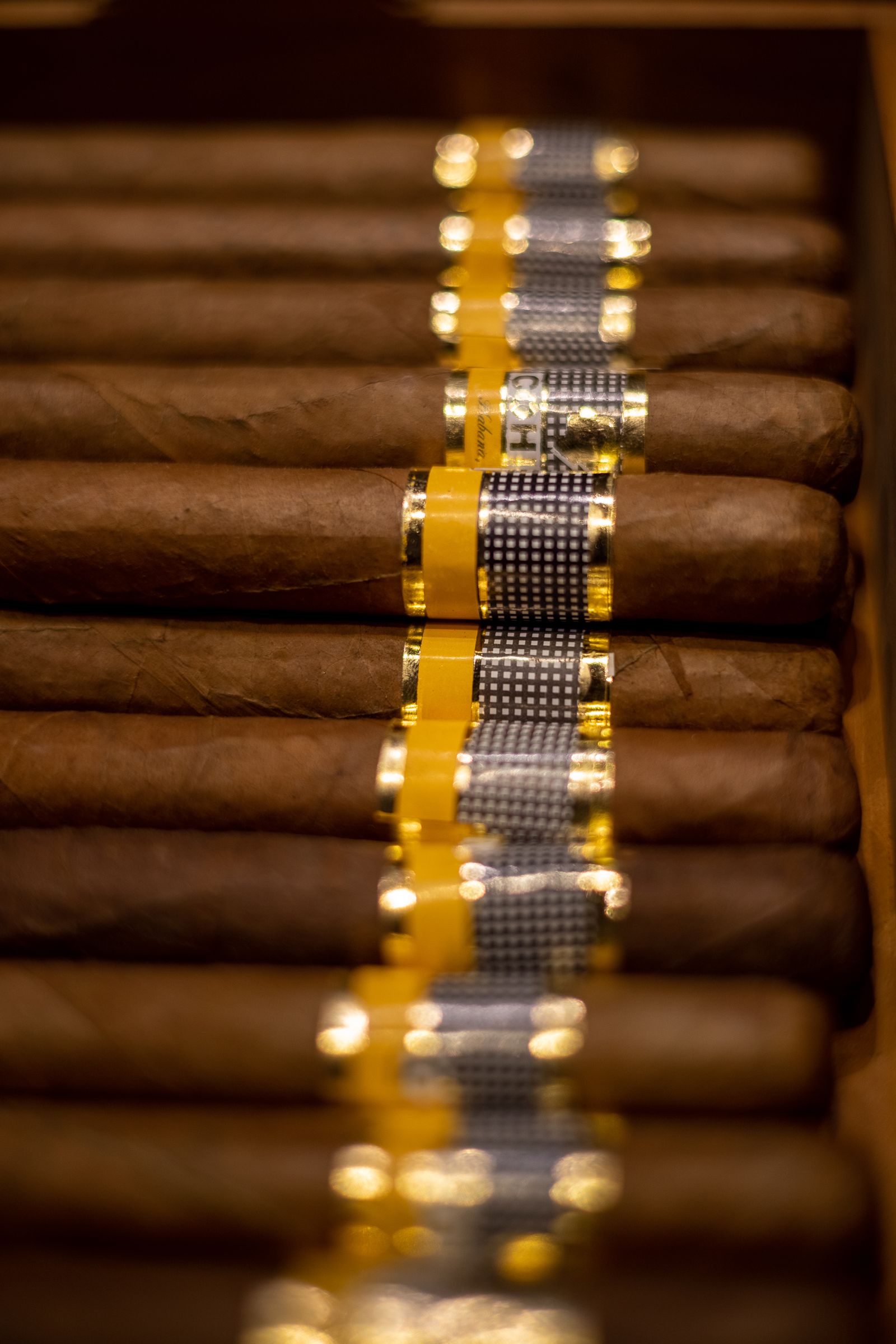

La Casa del Habano: The Global Embassy of Cuban Cigars
La Casa del Habano is the only retail concept Habanos S.A. operates worldwide. Here's what makes the franchise different, where the best ones are, and why the LCDH-Exclusive bands are quietly the most interesting cigars in Cuban tobacco.
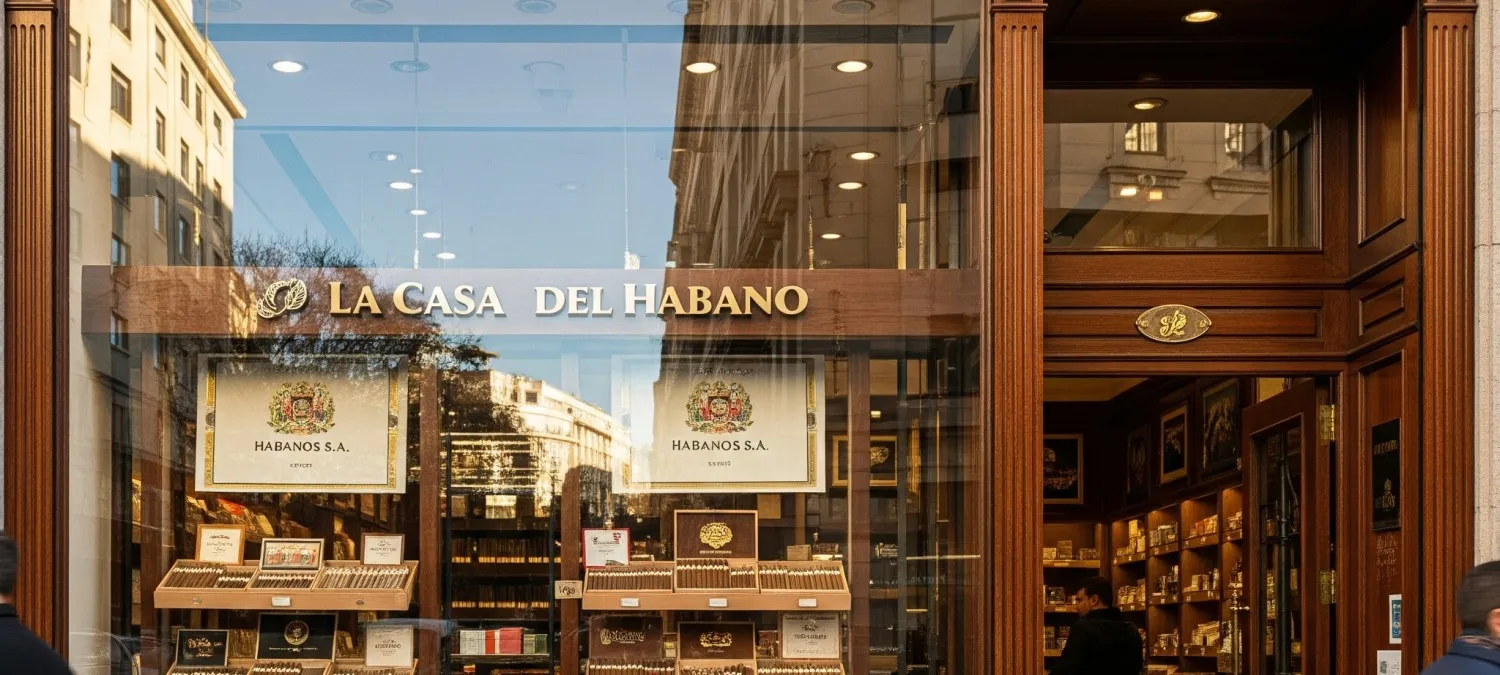
There are roughly 150 cigar shops on Earth that Habanos S.A. lets carry the La Casa del Habano name. Everything else is either a Habanos Specialist, an unaffiliated tobacconist, or someone selling counterfeits. The distinction matters more than most buyers realize. An LCDH is not simply a shop that happens to stock Cuban cigars — it is a franchised retail concept, supplied directly out of the Cuban distribution chain, contractually obligated to maintain the humidor at 68-72% relative humidity, and the only place in the world where you can reliably find certain releases.
If you have ever flown to a city and wondered whether the cigars in your humidor at home are genuine, the LCDH is the answer to the question.
What an LCDH actually is
La Casa del Habano is a franchise concept created by Habanos S.A., the Havana-based joint venture that controls global distribution of all 27 Cuban cigar brands. The first LCDH opened in Cancún in 1990 — a strategic move, because Mexico was one of the only Western markets where Habanos could freely operate at full retail without US embargo friction. From there the network expanded slowly and deliberately. By the late 2000s there were stores in Beirut, Moscow, Singapore, Bangkok, Dubai, Buenos Aires, and most of the major European capitals. Today the official locator on Habanos S.A.’s website lists outlets across more than 60 countries.
Three things distinguish an LCDH from the cigar shop next door. The first is direct sourcing — every box ships from Habanos S.A. into the franchise, never through a third-party wholesaler, which is why a counterfeit ending up in an LCDH humidor is functionally impossible. The second is the operational standard: walk-in humidor or large cabinet, monitored 18-21°C and 68-72% RH, signed inventory ledgers, trained staff. The third is access to LCDH-Exclusives and a priority allocation on Regional Editions, which I’ll come back to.
The franchise license is not cheap, and Habanos S.A. revokes it for cause. That’s why the network is small. There is no LCDH in the United States — the embargo precludes it — and there are still no stores in mainland China at the scale of the Singapore or Hong Kong operations, though that may change in this decade.
The LCDH-Exclusive band: the most interesting cigars no one talks about
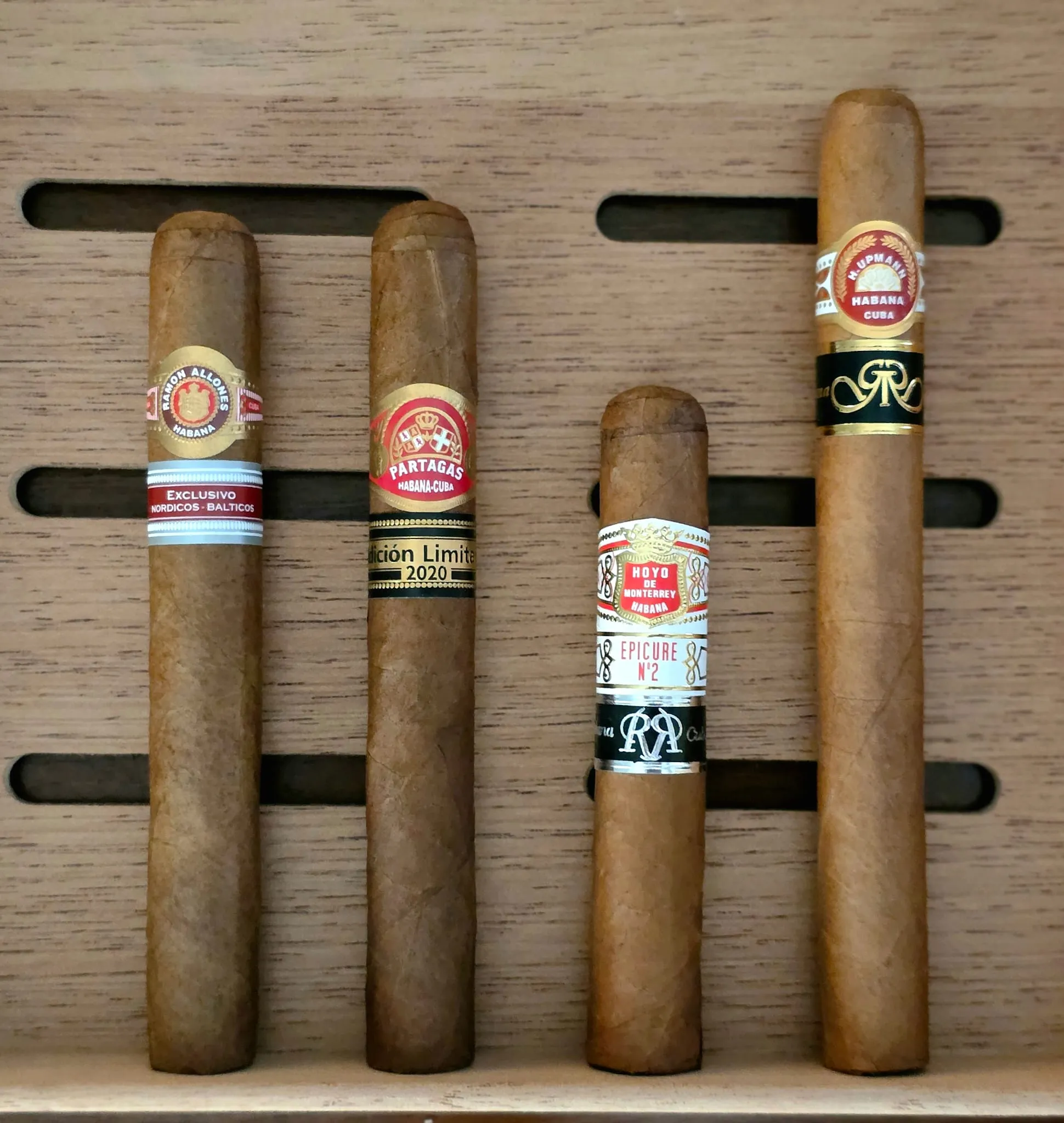
Most cigar buyers know about Edición Limitada and Edición Regional releases. Far fewer know that LCDH stores receive their own dedicated releases — cigars produced specifically for the franchise network and unavailable through any other channel. These carry a distinctive secondary band marked “La Casa del Habano” and are typically released in small quantities of a few thousand boxes worldwide.
Recent examples include the Hoyo de Monterrey Reserva Cosecha 2014 LCDH-Exclusive, the Punch Regalos LCDH, and the Bolívar Soberano LCDH, all distributed only to franchised stores. Because allocation goes through the LCDH network rather than individual country distributors, an LCDH in Vienna and one in Mexico City might both stock the same exclusive release in the same week. For collectors, this is the cleanest way into a regular flow of small-batch Cuban tobacco.
The catch is allocation. A store in a quiet European city will get its fair share; a store in a high-traffic location like Hong Kong or London will sell out within hours of the box arriving. If you’re chasing a specific LCDH-Exclusive, the play is to know the manager at a less-trafficked store, not the one a tourist would walk into first.
Why the European LCDH network matters
Europe holds the densest cluster of LCDH locations outside Cuba. Germany alone has a half-dozen, including the well-known Davidoff-affiliated outlets. Spain — historically Cuba’s largest single market — has stores in Madrid, Barcelona, and Valencia. France, Switzerland, Italy, the Netherlands, and Austria all carry meaningful inventory. For continental buyers, an LCDH within driving distance is realistic.
The Scandinavian situation is different. Sweden, Norway, and Finland sit on top of some of the highest tobacco tax regimes in Europe, which means an LCDH in those markets is technically operating with prices 40-60% above the Western European average. The nearest practical LCDH for a Stockholm aficionado is in Copenhagen, where Danish tax law sits at a comparatively reasonable middle ground and the selection is genuinely deep. A weekend trip to Copenhagen is the standard solution among Swedish cigar buyers who care about provenance.
For the deeper question of what’s actually worth buying once you’re standing in the humidor, our guide to Reserva, Gran Reserva, and limited edition Habanos breaks down the secondary-band hierarchy in detail.
What to expect inside the store
A well-run LCDH operates more like a wine merchant than a tobacconist. The humidor is the centerpiece — usually a walk-in cedar-lined room, sometimes a series of large cabinets — and staff move through it the way a sommelier moves through a cellar. They will ask what you smoke, what you have in your humidor at home, what you’re looking for in the next hour, and steer accordingly.
The smoking lounge, where local law permits one, is where the franchise concept becomes obvious. You buy a cigar, you sit, you order an espresso or a glass of rum, and you smoke it under the same conditions in which Habanos S.A. intends the cigar to be tasted. The lounges in Beirut, Mexico City, and Singapore are particularly worth the trip. The European lounges — Vienna’s, Madrid’s, the older Paris locations — feel closer to the Havana model: dark wood, leather, the smell of cedar and tobacco that you don’t actually find in many home humidors.
The staff are typically Habanos-trained, often through the Habanos Academy certification program that runs annually out of Cuba. Treat them as you would a knowledgeable wine seller. They reward serious questions.
Buying at an LCDH versus buying in Havana
There is a persistent assumption that cigars are dramatically cheaper at the source. As of the 2022 Habanos S.A. global pricing harmonization — which benchmarked Cohiba and Trinidad pricing against the Hong Kong dollar — that gap has functionally closed for the prestige brands. A Cohiba Behike 56 costs roughly the same in Havana as it does at the LCDH in Madrid or Frankfurt, with local tax shifting the final number by 10-20% in either direction. The reason to go to Havana now is not price. It’s selection, atmosphere, and the factory tours and shop tours that you simply cannot replicate elsewhere.
For non-prestige brands — Partagás, Romeo y Julieta, H. Upmann, Hoyo de Monterrey — Havana still offers a meaningful discount, particularly on Edición Regional cigars produced for the Cuban domestic market. Our definitive guide to LCDH locations in Havana covers what to look for once you’re on the island.
How to find one, and what to avoid
The Habanos S.A. site at habanos.com has a store locator that lists every officially franchised LCDH. If a shop is not on that list, it is not an LCDH, regardless of what the sign in the window says. There are gray-market retailers in several European countries that have appropriated the look and language of the franchise without holding the license. The cigars they sell may still be genuine — most are — but the storage, the staffing, and the access to exclusives are not what the franchise standard requires.
The two things to check before buying:
- The store appears on the official Habanos S.A. locator.
- The boxes carry both the Habanos S.A. seal and the Cuban government warranty seal — green, holographic, with a verifiable serial number.
If either of those is missing, walk out. The cigar world is full of plausible-looking counterfeits, particularly of Cohiba and Montecristo, and an LCDH is the cleanest defense against them.
The LCDH network is the closest thing the Cuban cigar industry has to a global retail brand. It exists because Habanos S.A. needed a way to guarantee authenticity, control presentation, and reach buyers in markets where the local distribution chain was unreliable. For aficionados, the franchise is the cleanest entry point into Cuban tobacco — a single sign in a window that promises real cigars, properly stored, by people who know what they’re selling.
If you have not yet found your local LCDH, it is worth the trip to find it. The good ones become a fixed appointment in an aficionado’s calendar.
Filed under
Cigar Culture