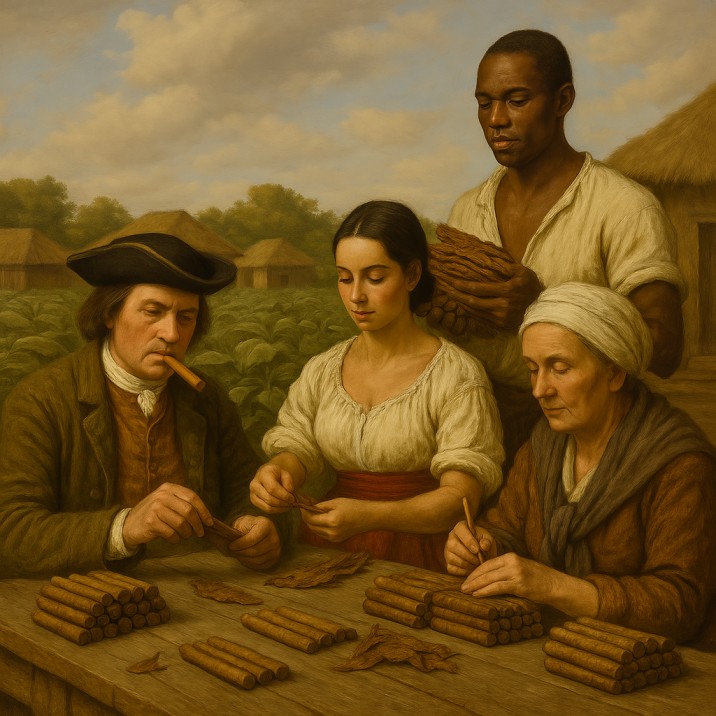
The history of cigars doesn’t start in a wood-paneled lounge in London or Havana. It starts in the Yucatán around 600 AD, with a Maya word — sik’ar, meaning “to smoke” — and a sacred leaf that priests rolled into a primitive cigar long before any European had heard of tobacco. Trace that thread forward through Spanish colonialism, the British Empire’s appetite, the Cuban Revolution, and the 1990s boom, and you get the cigar as we know it today: an object that carries a thousand years of ritual, trade, politics, and craft inside a few inches of rolled leaf.
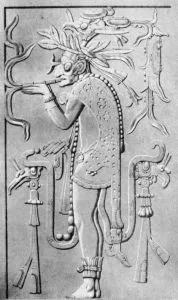
The Maya origin: tobacco as ritual, not pleasure
Archaeological evidence puts tobacco cultivation in Mesoamerica at least a thousand years before European contact. The Maya of the Yucatán and the Taíno of the Caribbean grew tobacco not as a consumer product but as a sacred plant. Priests used it in religious ceremonies, healers prescribed it for everything from snake bites to fatigue, and royal courts smoked it during diplomatic rituals.
The leaf was rolled into a tube — sometimes wrapped in plantain or palm leaves rather than the tobacco-on-tobacco construction we’d recognize — and called sik’ar, the Maya verb for the act of smoking. That word, transliterated through Spanish, became cigarro in Castilian and eventually cigar in English. The etymology survives in modern Habanos vocabulary: the word habano itself just means “from Havana,” but the underlying sik’ar roots show up in the word purero (a cigar smoker) and puro (a cigar made entirely of tobacco from one country — a topic worth its own essay, which we’ve written here).
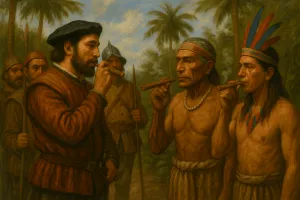
1492: Columbus, Jerez, and the inquisition
Columbus made landfall on a Taíno-occupied island in October 1492 and within weeks his crew had encountered tobacco smoking for the first time. Rodrigo de Jerez, one of his sailors, brought the habit back to Spain. The Inquisition arrested him for it. They called the practice “sinful and infernal” — smoke pouring from a man’s mouth looked, to a 15th-century Catholic court, exactly like demonic possession. Jerez spent seven years in prison while the rest of Europe figured out what tobacco actually was.
By the time he was released in the early 1500s, Spain had already lost the ability to stop tobacco’s spread. Sailors, merchants, and soldiers had carried the leaf to Portugal, France, Italy, and the Ottoman Empire. The transition from ritual smoke to consumer habit took less than a generation. Spain — and specifically Seville — became Europe’s nascent tobacco capital, with the first formal cigar production starting in royal factories by the late 1600s.
Cuba enters the picture
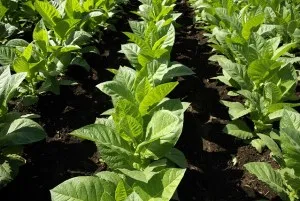
Cuba’s role in cigar history isn’t accidental. The island sits in the same latitude band that produces the world’s most flavorful tobacco — between roughly 18° and 23° North. The combination of red soil, consistent humidity, and a long dry season gives Cuban leaf a depth that no other region has fully replicated. By the mid-1600s, Spanish colonists had established plantations across the western provinces, particularly in what would become Vuelta Abajo — still the region that produces the wrapper leaf for nearly every premium Habano.
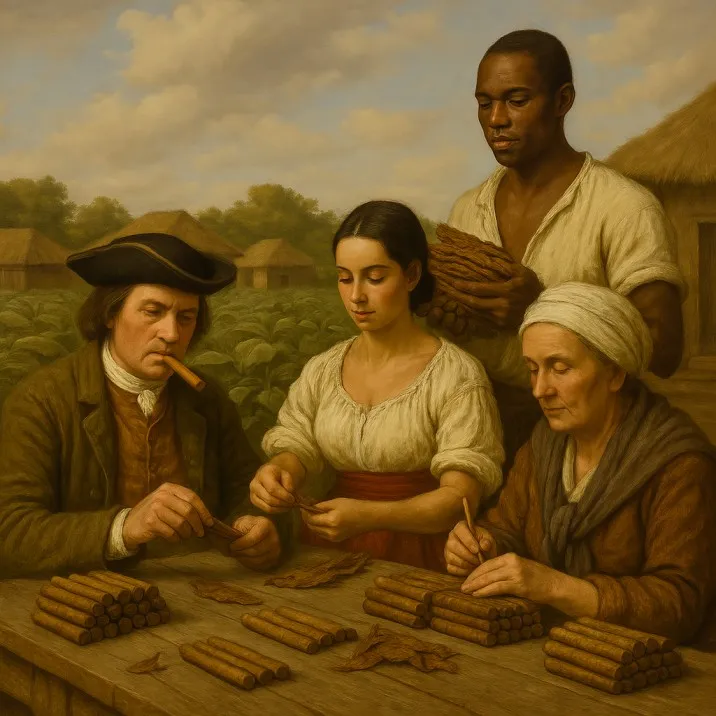
The Spanish crown held the trade tightly through the 17th and 18th centuries. Cuban tobacco was a royal monopoly, and unauthorized cultivation could mean prison or worse. That control eventually loosened — partly because the leaf became too profitable to limit, partly because political revolutions in the early 1800s broke colonial trade rules across the Americas. Once tobacco moved freely, the Cuban export economy exploded. By 1840, Punch had been founded in Havana, a brand we’ve covered separately; by 1845, H. Upmann; by the 1880s, dozens of brands you’d recognize today.
The 19th century and the British Empire
Two cultural forces pushed cigars from luxury good to gentleman’s standard in the 1800s. The first was the Peninsular War (1808–1814), which sent British and French soldiers into Spain and Portugal. They came home with the habit. The second was the rise of the European bourgeoisie, who needed visible markers of success — and a Cuban cigar after dinner became one of the most legible.
The British Empire turned cigar smoking into an institutional practice. London clubs built dedicated smoking rooms. The Royal Navy issued cigars as part of officers’ rations. Punch, named after the British satirical magazine character Mr. Punch, was created specifically for the English-speaking market — a Cuban brand designed by Spaniards to flatter the British sense of humor. That cross-cultural commerce is encoded in the brand’s bands and labels to this day.
America discovers cigars
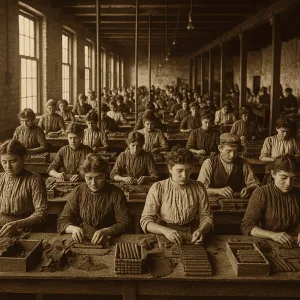
Across the Atlantic, the United States built its own cigar economy through the 1800s. Connecticut farmers discovered that the river valley between Hartford and Springfield produced wrapper leaf of unusual quality — soft, light, with the silky finish you still see on Connecticut-shade wrappers today. Pennsylvania and New York followed with their own production, and Tampa became the cigar capital of the country by the late 19th century as Cuban-American immigrants brought their craft to Florida.
American presidents smoked them. Grant, Cleveland, both Roosevelts, Kennedy, and Clinton all favored Cuban smokes. Mark Twain reportedly went through 20 cigars a day. The cigar became the symbolic American business meeting object — bankers, industrialists, and politicians closing deals with smoke in the air.
The golden age and the cigarette’s rise
The late 19th and early 20th centuries are usually called the cigar’s golden age. Brand identities crystallized, packaging became elaborate, and the format diversified from the few simple sizes of the 1700s into the dozens of vitolas we recognize today — corona, robusto, churchill, lonsdale, pyramid. Then came the cigarette.
Cigarettes were industrial. They were cheap, machine-rolled, portable, and didn’t require a cutter or a lighter or a humidor. Through World War I and especially during World War II, cigarettes displaced cigars as the default smoking product across most of the Western world. Cigar consumption collapsed. Many small American factories closed in the 1940s and 50s.

1959 and after: the diaspora that built modern non-Cuban cigars
Fidel Castro’s revolution in 1959 ended Cuban cigar production as it had existed. The new government nationalized the factories. Many of the master blenders, owners, and rollers — families like the Padróns, the Fuentes, the García family who would later create the Padilla brand — fled the island. They took something with them that wasn’t easily nationalized: knowledge of where Cuban tobacco seed had originally come from, how to grow it, and how to roll it.
That diaspora rebuilt the cigar industry in the Dominican Republic, Nicaragua, Honduras, and Mexico. Within a generation, the non-Cuban cigar world produced smokes that competed seriously with Habanos for the first time in history. The 1962 US embargo accelerated this — American demand suddenly couldn’t be met by Cuba, and the diaspora producers filled the gap.
That’s why your local cigar shop today carries Padrón, Fuente, Davidoff, and Oliva alongside (or instead of) Cuban brands. The split between “Cuban” and “New World” cigars is essentially a 1959 inheritance.
The 1990s boom
By the early 1990s, cigars were a declining business globally. Then Cigar Aficionado launched in 1992 and something unexpected happened. The magazine glamorized cigar smoking as a connoisseur’s pursuit — wine-tasting vocabulary, lifestyle photography, profile interviews with Hollywood stars holding humidors. Demand exploded. Premium imports into the US tripled between 1993 and 1997.
The boom was unsustainable — by 1998 the bubble had burst, with overproduction flooding the market with mediocre cigars. But it permanently changed the audience. After the 1990s, premium cigar smoking became a niche luxury pursuit instead of a mass-market habit, and the brands that survived (Padrón, Fuente, Davidoff, Habanos S.A.) leaned into that positioning hard.
Where we are now
Today’s premium cigar market is smaller than it was in 1900 but more refined than it has ever been. Tobacco cultivation is treated as agricultural science. Wrapper varietals are tracked like wine grapes — Habano 2000, Corojo 99, San Andrés Negro, Connecticut Broadleaf. Edición Limitada releases, Gran Reservas, and regional editions get the attention vintage Bordeaux gets in wine. The Habanos S.A. ownership change in 2021 and the EU’s pending tobacco tax directive are both reshaping the supply side, but demand from collectors and aficionados has rarely been stronger.
The cigar has traveled — from Maya ritual to Spanish royal monopoly to British colonial luxury to American business symbol to Cuban revolutionary export to globalized connoisseur object. The leaf is essentially the same plant the Maya cultivated. Everything around it has changed.
That’s the strange durability of a good cigar. A Padrón 1964 Anniversary you light tonight is, in some real sense, the continuation of a thousand-year conversation. The fire is the same. The smoke goes up the same way. The plant — Nicotiana tabacum — still grows in red soil somewhere between 18° and 23° North. Everything else is just commentary.
Pull a cigar from your humidor, cut it cleanly, light it with patience. You’re participating in something that started in the Yucatán a millennium before any of us were born. The history goes with the smoke.