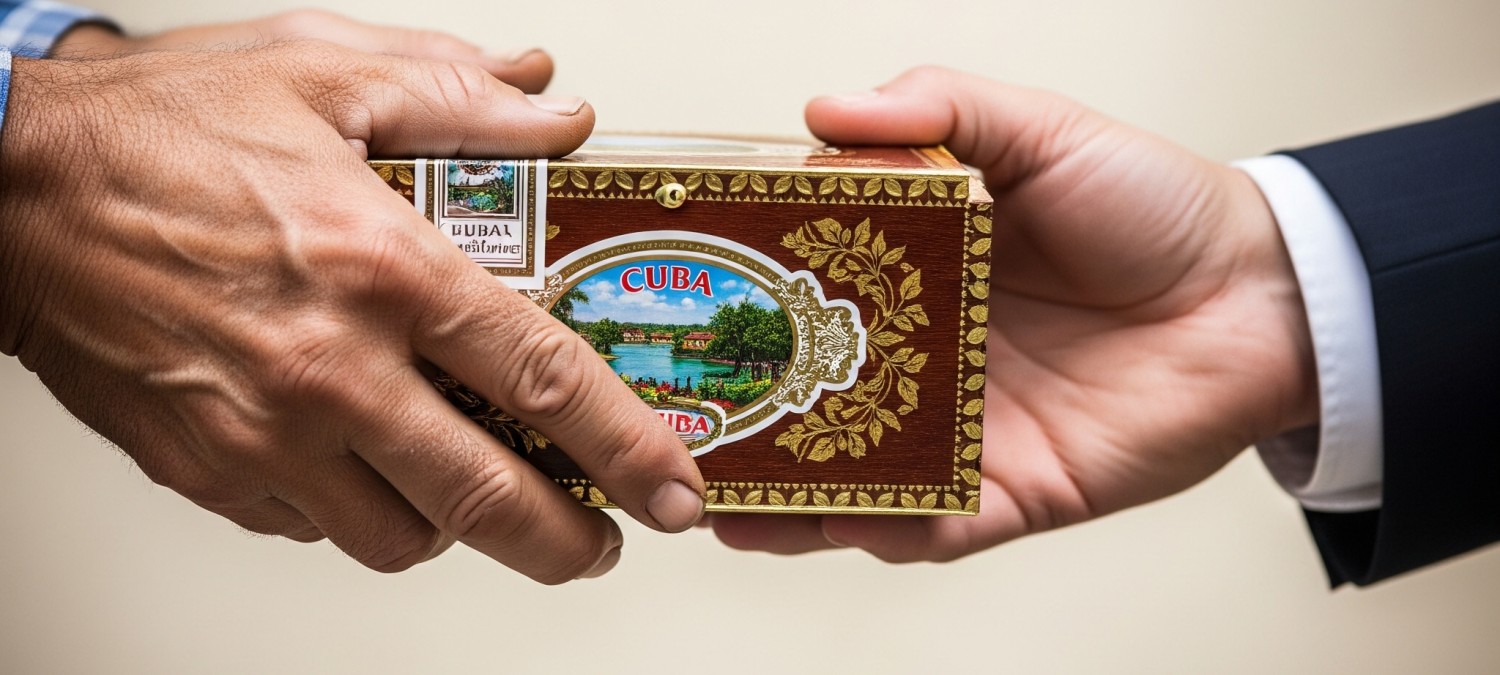
For nearly twenty years, the company that controls the global distribution of every Cuban premium cigar — Habanos S.A. — was owned 50/50 by the Cuban state and a Spanish-British tobacco conglomerate. That structure ended in 2020. The British half of the partnership exited the premium cigar business entirely. The new buyer was a private investor group based in Hong Kong. And the consequences of that transaction, five years on, are now visible in every annual Habanos price list, every Festival del Habano release schedule, and every Asia-allocated regional edition that doesn’t reach European or North American shelves.
This is what actually happened, who is now on the other side of the table from the Cuban government, and what the change has meant for Cuban cigars in 2026.
The transaction, in plain terms
For the twenty years preceding 2020, Habanos S.A. operated as a 50/50 joint venture between two parties:
- Cubatabaco — the Cuban state-owned tobacco enterprise, formally Empresa Cubana del Tabaco.
- Altadis S.A. — the Spanish premium-cigar company that became part of UK-based Imperial Brands (formerly Imperial Tobacco) after Imperial’s 2008 acquisition of Altadis for €12.6 billion. Through Altadis, Imperial held the non-Cuban 50% of Habanos S.A.
In July 2020, Imperial Brands announced it would divest its premium cigar division — including the Altadis-held Habanos stake — as part of a strategic shift toward “next-generation” nicotine products. The sale, valued at approximately €1.1 billion, closed in October 2020. The buyer was Allied Cigar Corporation S.L., a Hong Kong-funded consortium reported by Reuters and the broader trade press as backed by Hong Kong and Thai investor capital.
The transaction left Habanos S.A. with the same 50/50 ownership structure the company had operated under for two decades — but with a fundamentally different partner sitting opposite the Cuban government. The Spanish-British corporate tobacco operator had been replaced by a private investment vehicle with deep roots in the Asian luxury-goods market.
Why the industry is still talking about it five years on
The 2020 transaction was not, in pure financial terms, a particularly large deal. €1.1 billion is a fraction of what a comparable luxury asset trades for in watches or wine. The reason the cigar industry is still actively discussing the change in 2026 is that it shifted the strategic logic of the entire premium Cuban cigar business in four specific ways.
1. The Asia pivot is no longer speculation
The single most visible operational change is the geographic redistribution of rare-cigar allocation. In the years immediately following the 2020 transaction, enthusiasts in Europe, the UK and Canada began reporting — and trade-press analysis confirmed — that Habanos Regional Edition allocations were skewing heavily toward Asia-Pacific markets, particularly Hong Kong, mainland China, and Thailand. The pattern has continued every year since.
The mechanism is straightforward: the new investor group is, by all reasonable accounts, deeply embedded in the Asian luxury market and has substantially better distribution relationships in that region than the previous Altadis structure had. Allocating more product through those channels is the rational corporate move. The downside that the trade press has covered less is that traditional European cigar markets — the UK, Spain, Germany, Switzerland — are now structurally under-allocated relative to the position they held in 2018, and the smaller European Habanos Specialists are visibly under more pressure than they were before the transaction.
For collectors, this means the Edición Limitada and Regional Edition releases that used to sit on London humidor shelves now move through Hong Kong and Shanghai before they reach Europe, if they reach Europe at all.
2. Premiumisation is now policy
Annual Habanos price increases pre-2020 averaged roughly 4–7% across the portfolio. Post-2020, the annual hikes have run materially higher — Cohiba in particular has seen multiple double-digit price increases, and the brand’s flagship Behike line now lists at retail levels that would have been considered absurd in 2018.
The official framing is that Cuban premium cigars are being repositioned as a true luxury category — competitive with Swiss watches and French Cognac rather than priced as a tobacco product. The packaging supports the framing. Boxes have been overhauled across major brands. NFC-chipped authentication has been rolled out on flagship references to combat counterfeiting. The Cohiba 50 Aniversario and Behike 15th Anniversary releases were priced and presented as collectible luxury objects, not cigars.
The editorial view here: the premiumisation is the right strategic call for the brand, and the wrong call for the existing customer base. Cuban premium cigars have always been an aspirational product, but they have been an aspirational product working European and North American buyers could afford regularly. The new pricing structure increasingly positions them as a once-a-year occasion product for those same buyers. Whether the new Asian luxury demand fully replaces the volume lost from price-pushed-out European buyers is the central commercial question facing the company through 2030.
3. The US embargo question, viewed from a different angle
The persistent speculation about a potential post-embargo opening of the US market to Cuban cigars takes on a different cast under the new ownership structure. The previous Altadis ownership, headquartered in Spain and owned by a British company, had a particular set of political relationships and lobbying interests in Washington. The new ownership — Hong Kong-based, with Thai capital — has a different set.
The ownership change does not affect the legal status of the US embargo on Cuban goods, which is governed by US law and unaffected by who owns the Cuban side’s distribution partner. But the commercial preparation for a hypothetical post-embargo opening looks different under the new structure. The current ownership has more operational latitude in non-US markets than Imperial Brands had, and there is a credible argument that it is using that latitude to build distribution relationships in Mexico and the Caribbean that would route effectively into a re-opened US market on day one.
4. The tradition-versus-corporate question
The persistent concern in the collector community is whether the marketing-led, luxury-positioning approach comes at the expense of the agricultural and rolling traditions that define Cuban premium tobacco. There is no hard public evidence that quality has slipped, and the master torcedores at the major factories — El Laguito, Partagás, La Corona, H. Upmann — are by all reports the same craftspeople producing under the same supervision they did in 2018.
But the concern is not unreasonable. Every minor inconsistency in a current production box — a slightly tight draw, a wrapper variation, an off note in the first third — is now debated in cigar forums as a possible consequence of the corporate direction. Some of that debate is reasonable signal. Most of it is noise generated by the visibility of the price increases. The honest answer is that 2020–2026 quality has been broadly consistent with 2015–2020 quality, with the usual minor crop-year and factory variations. The next five years will be the real test as the new ownership’s preferences for what gets produced and how propagate through the agricultural cycle.
The pricing pressure, in context
The Habanos ownership change is one of three forces simultaneously raising premium cigar prices in 2026. The other two are external: the proposed EU tobacco tax directive that would raise minimum cigar excise floors across the EU, and the UK generational tobacco ban that is closing the British market to all post-2009-born buyers over time. Combined, these pressures are reshaping the European cigar market in ways that will be more visible by 2028 than they are today. For comparable detail on what is happening with US imports under the same broader regulatory environment, see our reporting on US cigar industry trends.
What it means for buyers now
For aficionados in 2026, three practical implications.
First, the cheap-Habano era is structurally over, and was over before the regulatory pressure arrived. Annual price increases of 10–15% on Cohiba and Trinidad are now the baseline, not the exception. A box bought today is — under any reasonable forward-pricing model — meaningfully cheaper than the same box bought in 2028.
Second, allocation matters more than it ever has. Building a working relationship with a Habanos Specialist or a La Casa del Habano flagship is no longer a nice-to-have. It is the difference between being able to source the year’s Edición Limitada releases and reading about them on someone else’s forum post.
Third, the geography of the cigar market has genuinely changed. Asia is now the gravitational centre of premium Cuban cigar consumption, and that is unlikely to reverse. European and American buyers who want continued access to the full Habanos portfolio increasingly need to think about how they buy — directly through allocation relationships, often well in advance of release — rather than expecting the inventory to come to them.
The ownership change did not break Cuban cigars. It restructured the customer base they are made for, and the pricing they are made at. Five years in, the company is producing as well as it ever has and selling into a more profitable customer base than it ever has. Whether the existing customer base of the previous twenty years feels well served by that outcome is a different question — and one the next price-list announcement will keep answering, year after year.