
The Cigar Band: Origins, Design, and the Quiet Hobby of Collecting Them
The cigar band started as a 19th-century anti-counterfeit measure and became one of the most collected pieces of printed paper in the world. A look at vitolphilia, lithography, and why some bands are now worth more than the cigars.
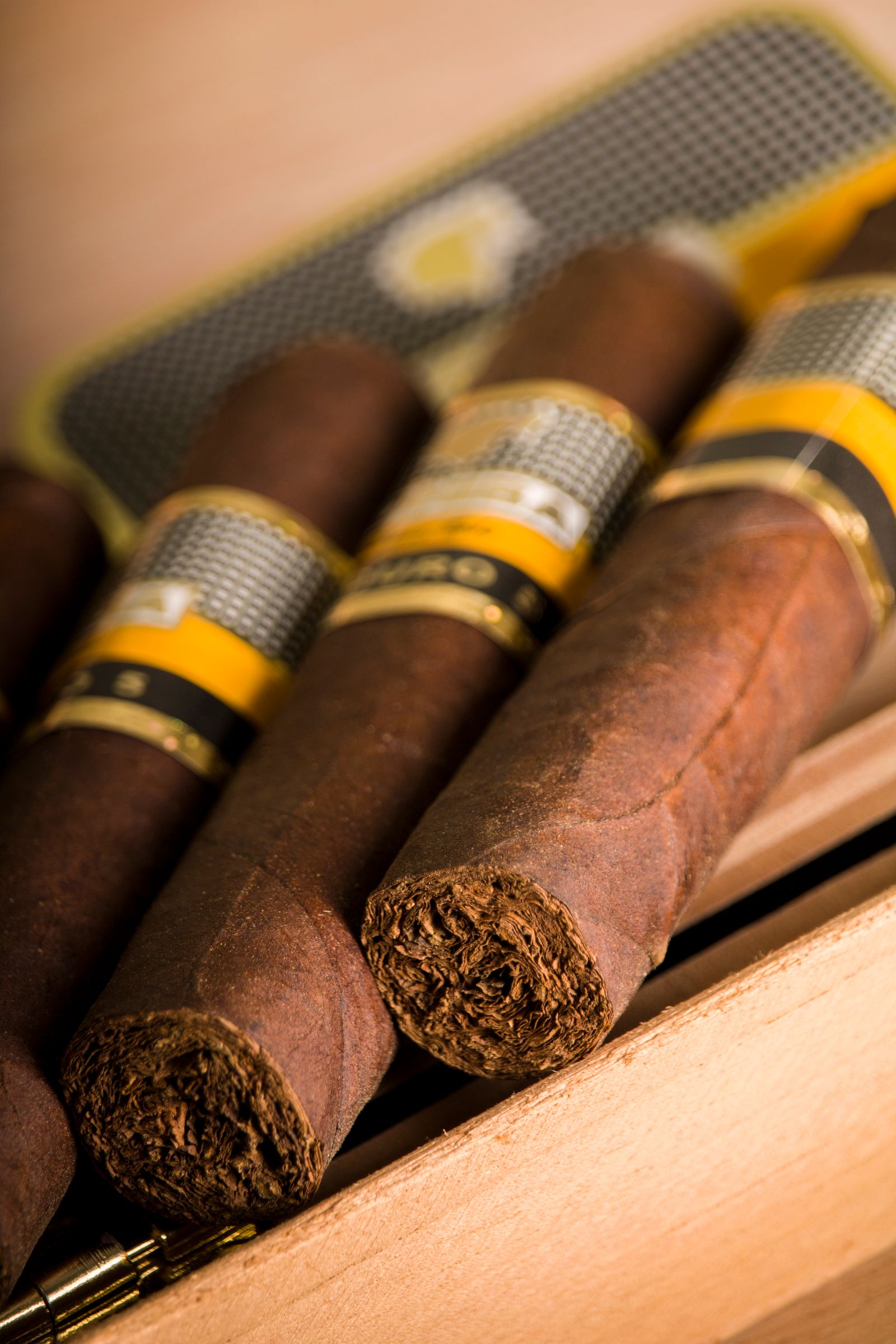
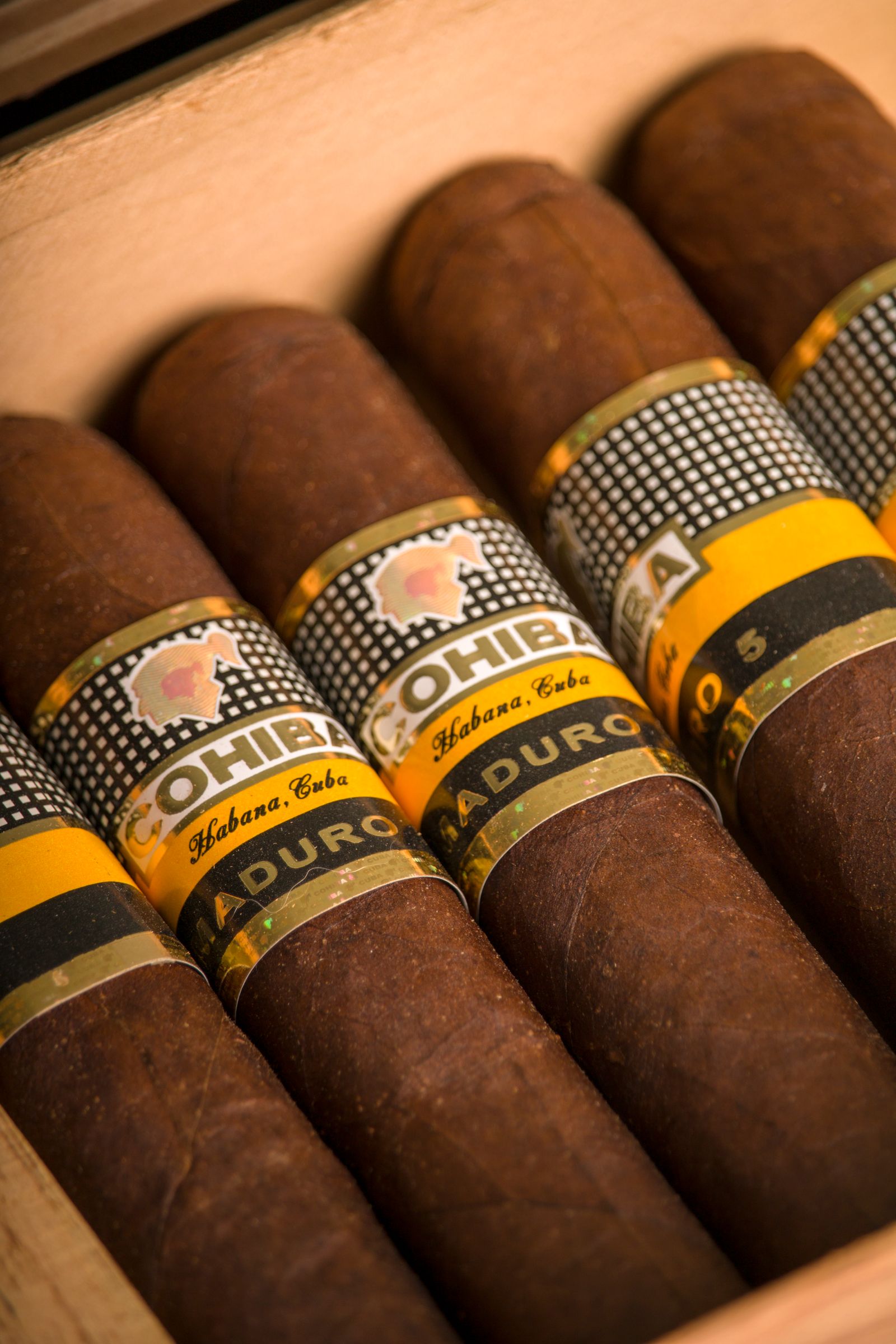
Pull a Cohiba Behike out of its tube and the first thing you see is not the wrapper. It is the band — gold foil over black, the white silhouette of a Taíno head, and a hologram strip that catches the light when you turn it. That little paper ring is doing more work than most people notice. It is identifying the brand, asserting authenticity, signalling price tier, and — if you keep it after the smoke — entering a hobby older than the brand on its face.
Cigar bands have been called wearable history. They have also been called the most successful piece of disposable marketing the 19th century produced. Both are true. They began as a practical fix to a counterfeiting problem in Cuba in the 1830s and ended up as the most collected printed-paper object in the world after stamps.
Where the band actually came from
The romantic stories get told constantly. Catherine the Great supposedly wrapped her cigars in silk so she would not stain her fingers. English aristocrats in white evening gloves needed a paper ring to keep tobacco off the calfskin. Nice tales. There is no documentary evidence for either one — no surviving correspondence, no portrait, no order book. They are pub history.
The credible origin is industrial, and it belongs to Gustavo Bock. A Dutch tobacco merchant who moved to Havana in the 1830s, Bock built a successful cigar export business and watched, like every legitimate Cuban manufacturer of his generation, as European counterfeiters slapped his brand name onto inferior cigars and sold them across London, Paris, and Hamburg. Around 1855 he started wrapping each of his cigars in a small printed band carrying his signature. The fakes had no band. The genuine article did. The mark could not be easily reproduced because lithography was expensive and the engraving plates were held inside his Havana factory.
The idea spread immediately. Partagás, Romeo y Julieta, H. Upmann, La Corona — every serious house in Havana had banded cigars by the 1870s. The band did not exist to look pretty. It existed because piracy was destroying the trade, and a printed paper ring was the cheapest verification technology available before holography.
Why it stayed once counterfeits got better
By the early 20th century, counterfeit bands existed too. So the function shifted. The band became the brand’s most visible piece of real estate — the only part of the cigar a customer sees at the point of sale, the only part still showing in a glass humidor case, the only part that survives on the ashtray when the smoke is gone. Marketing budgets followed.
Three things kept the band useful even when it stopped being a reliable anti-fraud measure:
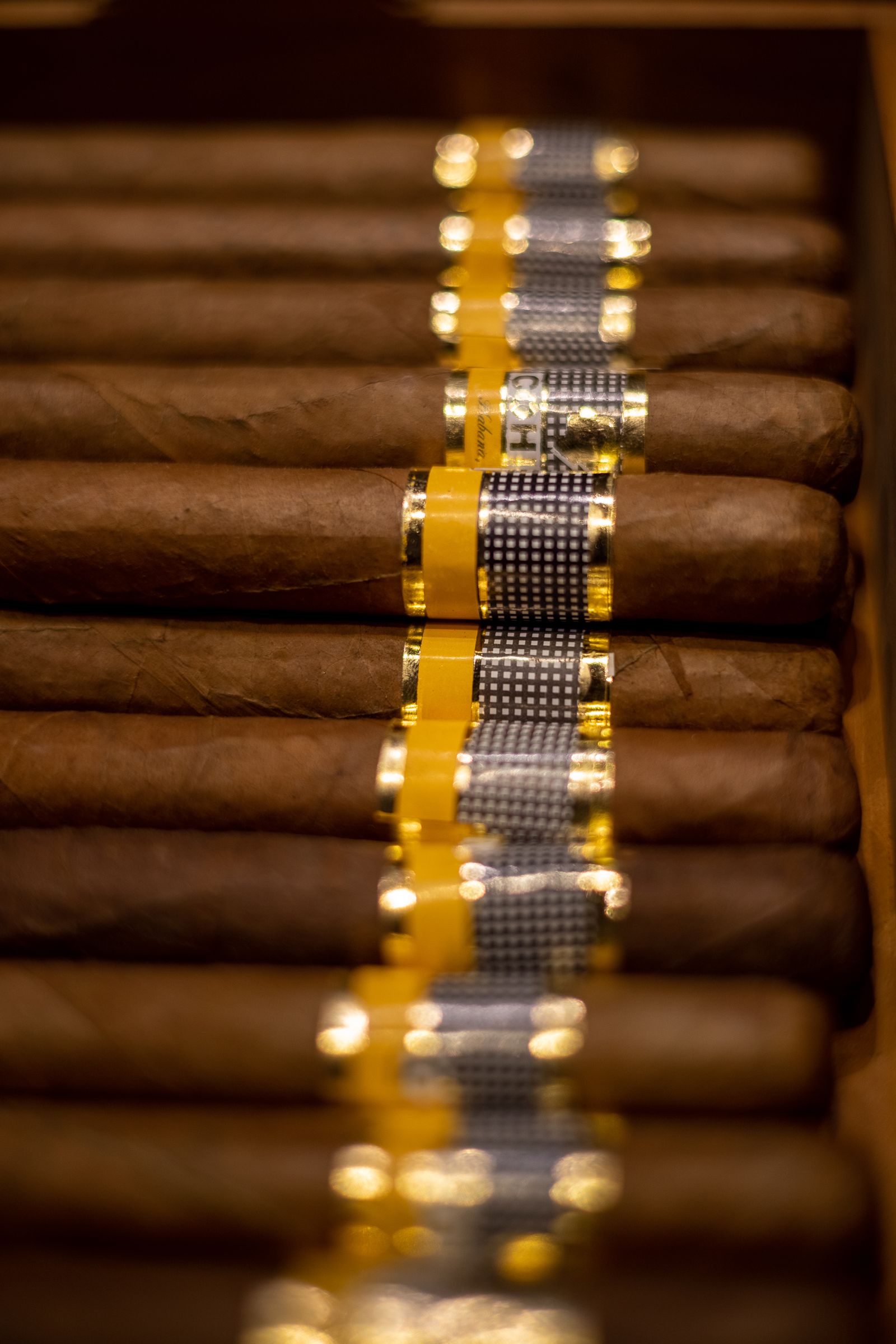
The first is recognition at distance. Walk into the humidor at La Casa del Habano in Havana, scan a wall of open boxes, and you are reading bands, not cigars. The red and gold of Partagás, the black and white check of Cohiba’s older releases, the yellow of Montecristo — all of it engineered to register from across a room.
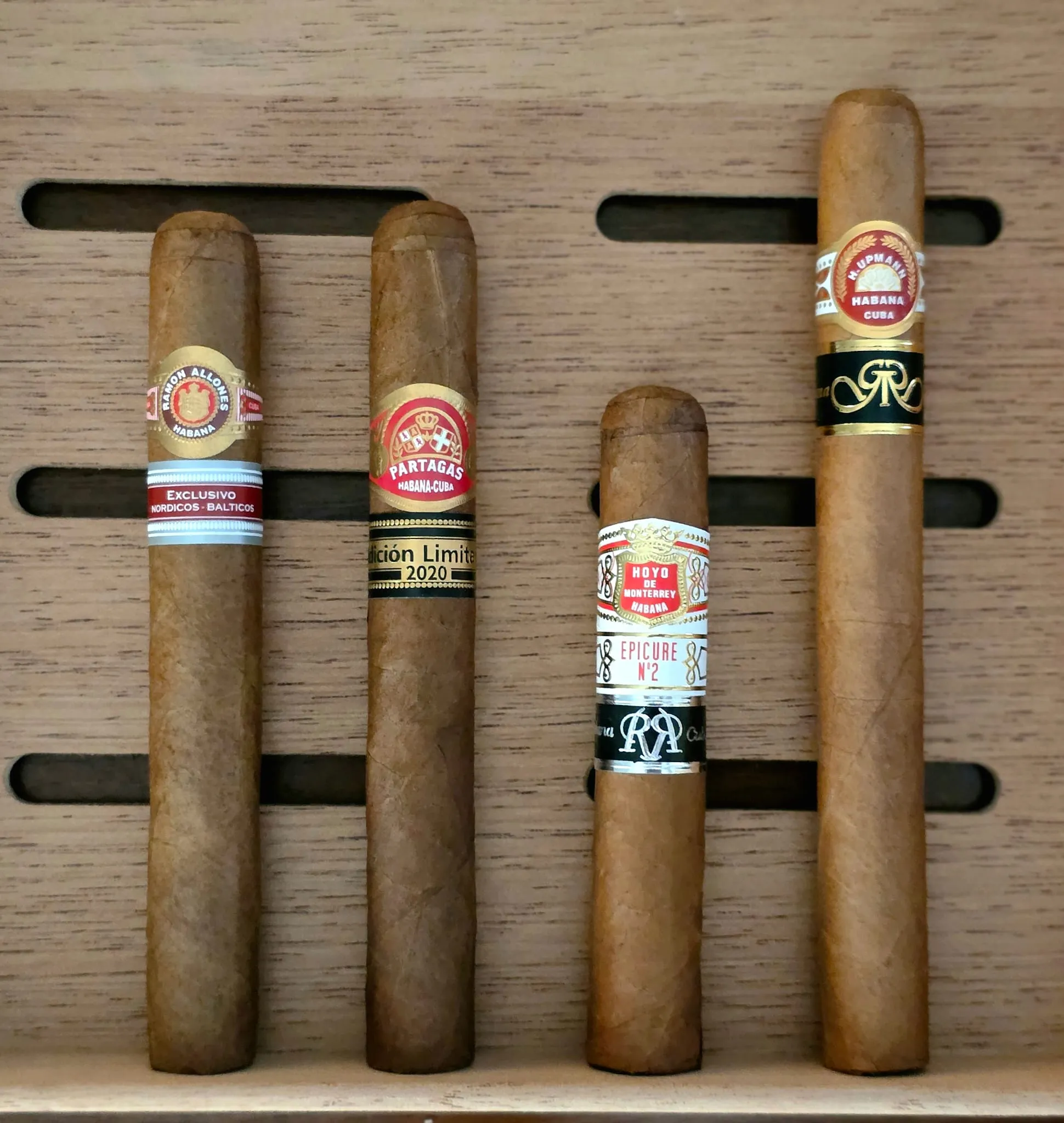
The second is tier signalling. A Cohiba Behike band is heavier paper than a basic Robusto. The Edición Limitada releases get a second band — a black collector band, the production year printed on it — and you can tell from the doorway which release a customer is holding. Habanos S.A.’s Reserva and Gran Reserva program leans on this hard.
The third is the slim margin of physical protection. The band holds the wrapper down at the head of the cigar, which matters more than people think on thinner-gauge vitolas where a loose wrapper edge can unwind during the smoke.
The golden age of band design: 1880 to 1920
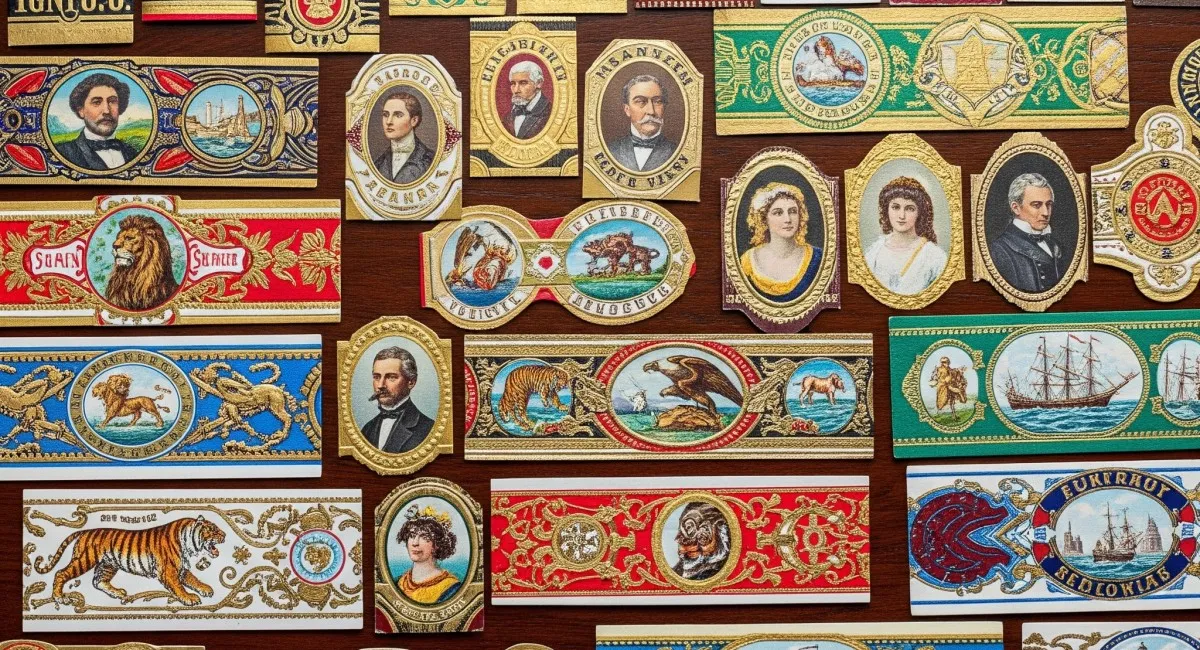
The thirty-five years between roughly 1885 and 1920 are what collectors call the golden age of cigar band art. The technology that made it possible was chromolithography — the process of printing in multiple colours by registering separate stone or plate impressions, perfected in Europe in the 1870s and brought to the cigar trade by lithography houses in Havana, Tampa, and Key West.
The output was extraordinary. Bands from this era routinely used eight, ten, even fourteen colour passes. Many were embossed. Most carried gold-leaf accents — real gold, hammered to leaf and applied by hand, not the imitation gilt of modern printing. The imagery ran from the predictable (royal coats of arms, founders’ portraits) to the strange (zoological animals, classical nudes, scenes from Spanish history, allegorical figures for Liberty and Commerce).
The American factories in Tampa’s Ybor City and Key West produced some of the most elaborate work of the period — the Cuban-American manufacturers, including the family that would later found Arturo Fuente, treated their bands as commercial art. Surviving examples of bands from the now-defunct Cuesta-Rey, Corral Wodiska, and El Reloj brands trade for hundreds of dollars at auction precisely because the printing was that good and the brands no longer exist.
Vitolphilia: the hobby almost nobody talks about
The collection of cigar bands has a name — vitolphilia — and a small but extremely committed international community. The German Federation of Cigar Band Collectors (BDZ) was founded in 1953. The Dutch and Belgian clubs go back further. There are active groups in Spain, France, Italy, the Czech Republic, Mexico, and Cuba itself, where the Museo del Tabaco in Havana holds one of the largest band archives in the world (worth a visit if you make it to the city — see our Havana guide).
The economics of the hobby look like philately, which is what they are modelled on. Bands from defunct 19th-century brands command serious money. A complete set of pre-revolutionary H. Upmann bands from the 1920s can clear $2,000 at auction. Bands with printing errors — a misaligned colour, a missing element — are worth more than the perfect version, exactly the way misprinted stamps are. Cuban bands from the post-1959 nationalisation period, when many small brands disappeared overnight, are a category of their own.
Modern collectors mostly trade rather than buy. The classic move is a trip to Havana, half a day at the Habanos Festival, and a stack of fresh bands negotiated off the cigars of friends, hotel concierges, and rolling-room rollers willing to part with the trim of the day. The bands get pressed flat in old books, mounted on archival cardstock, and catalogued by brand, sub-brand, and year.
The hobby’s slow decline is real — Cuban Cigar Website maintains the most thorough open reference at cubancigarwebsite.com, and the editorial note there is that fewer aficionados under 40 collect bands than at any point in the last sixty years. Editorial view: that is a shame, because vitolphilia is the only branch of cigar culture you can pursue without smoking another cigar.
What modern bands actually tell you
A band in 2026 carries information that a band in 1900 did not. The Habanos S.A. authenticity seal — that small barcode-and-hologram strip — was introduced after a wave of high-end counterfeits hit the European market in the early 2010s. Each strip carries a unique serial that, in theory, you can verify on the Habanos website before you smoke (the verification tool has been intermittently available; the cigars themselves are the better tell).
The double-band convention for limited and special releases has hardened into a rule. Single band: regular production. Black second band with year: Edición Limitada. Anniversary band: special anniversary release. White Reserva or Gran Reserva band: aged-tobacco programme.
Non-Cuban houses use the same grammar. Padrón’s 1964 Anniversary uses a deep brown maduro band; the 1926 line gets gold lettering on cream; the Family Reserve gets a third band with the founder’s signature. Arturo Fuente’s OpusX uses gold on black with the family crest. Davidoff uses minimalism as a tier signal — the more important the cigar, the simpler the band.
Worth a small editorial complaint: the modern industry has, in places, leaned too hard on the band. There are now boutique brands shipping cigars with three or four bands stacked on top of each other, more paper than wrapper. The trend is mostly Nicaraguan and mostly aimed at Instagram. It is the cigar equivalent of a wine bottle with a metal medallion glued to the front. Skip it. The cigars that matter still trust a single, well-designed band to do the work.
Why any of this matters at the lighting end
You will not taste a cigar band. It does not affect the smoke. So why care?
Because the band is the part of the cigar that survives the smoking. The leaf goes up as smoke, the ash falls into the tray, and what is left on your desk — slightly singed, sometimes — is a printed paper ring that has been doing essentially the same job since the 1850s. Keep them. Press them flat. Glue them into a notebook, or just throw them into a tin. A decade from now you will have a small visual record of every important cigar you have smoked, and the only meaningful evidence that the Edición Limitada you bought at the 2024 Habanos Festival was, in fact, that particular release.
The band is craft. It is also receipt. The cigar industry has been quietly selling both for almost two hundred years.
Filed under
Cigar Culture