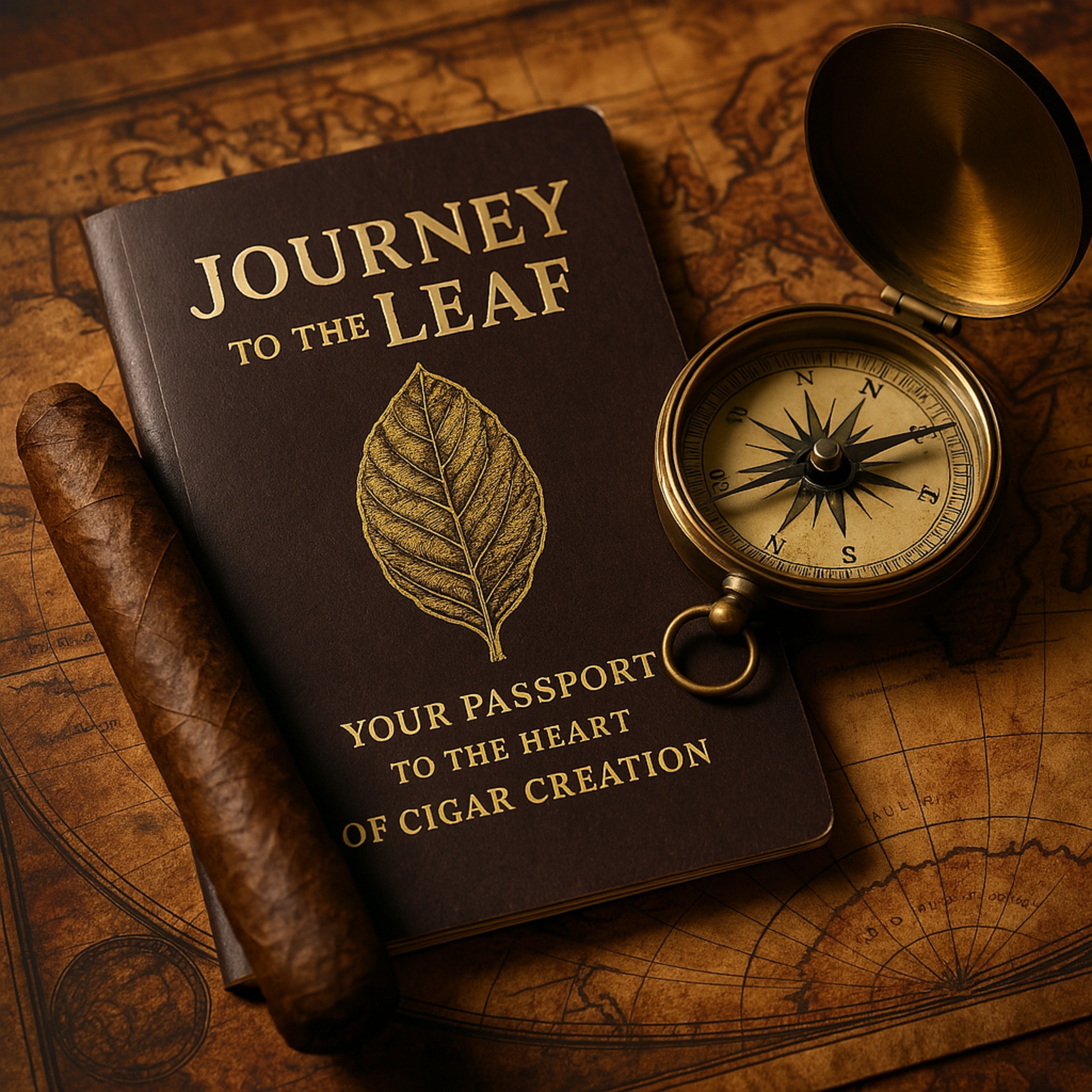
You don’t really understand a cigar until you’ve watched one get built. Reading about Volado, Seco, and Ligero is one thing. Standing in a curing barn in Estelí while a foreman explains why this year’s Ligero ferments hotter than last year’s, with the leaf you’re about to smoke hanging six feet over your head, is something else entirely. That shift — from theoretical understanding to walking-the-fields understanding — is what cigar tourism actually delivers, and it’s why the trade has quietly become one of the more interesting corners of luxury travel.
The trips themselves are not new. Cuban cigar pilgrimages have existed since the 1990s boom. What’s changed in the last decade is the seriousness of the operation. Nicaragua now runs structured tobacco tours through Estelí, Condega, and Jalapa with English-speaking guides who can answer technical questions about leaf chemistry. Honduras has built out the Jamastrán Valley experience around Camacho’s facilities. Cuba, despite the logistical friction of working with state-run Habanos S.A., still offers the most historically resonant version of the experience for anyone willing to deal with the bureaucracy.
Why the trip is worth taking
A cigar is the product of roughly two years of work before it reaches your humidor. Seed selection in January, transplanting in October-November, harvesting leaf by leaf from January through March, curing for 45-60 days in tobacco barns, fermenting in pilones for 12-24 months, sorting, blending, rolling, aging, packing, shipping. Every step makes decisions that affect what the cigar tastes like in your hand.
You can read about all of this. You can watch documentaries. But the difference between knowing that fermentation pilones reach 40-45°C and standing next to one in a Plasencia warehouse, palm flat against the side of a stack of 2,000 pounds of leaf, feeling the heat coming through, is the difference between an abstraction and a fact. The tobacco crafts community has known this for a long time. The wine world figured out winery tourism in the 1970s; whisky tourism in Scotland exploded in the 2000s. Premium cigars are roughly twenty years behind both, which means the tours that exist now are still being built by the people who actually grow and roll the product, with relatively little marketing polish.
That’s a feature, not a bug. The Plasencia operation in Estelí is run by the family that owns it. The same is true at Padrón, Joya de Nicaragua, AJ Fernandez. When you visit, you’re getting the actual story from people whose names are on the bands.
The three main destinations
Nicaragua: the modern center of gravity
Nicaragua has become the most accessible serious cigar destination. Estelí, two and a half hours north of Managua by car, is the operational heart — home to Plasencia, Joya de Nicaragua, AJ Fernandez, My Father Cigars, Drew Estate’s Estelí operations, and a dozen smaller boutique factories. Condega and Jalapa, to the north, are the main growing zones for filler and binder leaf.
What makes Nicaraguan tobacco distinctive is the volcanic soil. The country sits on a chain of active volcanoes, and the ash deposits that cover most of the growing regions add specific mineral compounds — particularly sulfur — that the leaf takes up during the growing cycle. The resulting tobacco has the pepper-and-earth character that defines Nicaraguan puros. Standing in a field at Pueblo Nuevo in February, watching workers pick primings selectively rather than topping whole plants, you can see in real time why the leaves cost what they cost. The labor intensity is staggering.
Tours typically run 4-7 days and combine farm visits, factory tours, and tastings. Drew Estate’s Cigar Safari program is the best-known structured option — they’ve been running multi-day immersive trips since 2008 and have a refined operation. Plasencia and several other producers offer their own tours, often arranged through speciality travel operators or directly through brand representatives. Cost generally runs $2,500-5,000 per person for a week, depending on level of accommodation.
Honduras: the Jamastrán Valley
Honduras gets less attention than Nicaragua but produces some of the most distinctive Central American tobacco. The Jamastrán Valley, in the eastern part of the country, has been growing premium leaf since the 1960s, when Cuban planters who initially settled in the Dominican Republic moved on to Honduras looking for soil closer to what they’d left behind.
Camacho, owned by Davidoff since 2008, runs the most serious tour operation in Honduras. Their facility in Danlí includes the corojo seed program — they’re the largest single producer of corojo wrapper outside of Cuba, and the seed line they cultivate traces directly back to pre-revolutionary Cuban stock. A Camacho tour walks visitors through the entire process from seed bed to packaging line, with particular attention to the corojo program because it’s the brand’s defining technical differentiator.
Honduran tours are typically shorter than Nicaraguan ones — 3-5 days — and run somewhat cheaper because the country has less developed luxury tourism infrastructure. The trade-off is a more rustic experience, which some travelers prefer.
Cuba: the original
Cuban cigar tourism is its own animal. The annual Festival del Habano, held every February or March in Havana, is the canonical event — five days of factory tours, seminars, tastings, and gala dinners organized by Habanos S.A. Tickets sell out months in advance and run €1,500-3,000 depending on level. The festival is the only time of year when most of the working cigar factories — Partagás, La Corona, El Laguito — are formally open to outside visitors.
Outside the festival, Cuban cigar tourism works through specialised operators who arrange access to factories and tobacco farms in Pinar del Río. A multi-day trip to the Vuelta Abajo — the legendary tobacco region around San Juan y Martínez and San Luis — is the technical pilgrimage worth making for anyone serious about understanding why Cuban tobacco tastes the way it does. The red clay soil, the specific microclimate, the centuries of agricultural memory built into the families who farm it: standing in a vega in San Luis in February, with the wrapper leaf curing in barns the size of small cathedrals, is the closest you get to understanding Cuban tobacco from first principles.
US travel to Cuba remains legally restricted — visitors generally need to qualify under one of the twelve OFAC categories of authorized travel, most commonly the “support for the Cuban people” category — and the regulatory situation has shifted multiple times in the last decade. European visitors face no such friction.
For a deeper look at navigating Havana specifically, the city itself rewards a few days of exploration beyond the cigar tour. The definitive guide to Havana as the cigar capital covers the territory.
What a serious factory tour actually involves
The good tours are not whistle-stop walkthroughs. A proper factory visit at Plasencia or Padrón typically includes:
- Time in the escogida. The leaf-sorting facility where workers grade tobacco by color, texture, and priming position. The grading hierarchy is where the economics of the cigar begin — the leaves rejected here are the difference between long-filler and short-filler, and watching the sorters work makes that math visible.
- The fermentation warehouses. Pilones of leaf stacked six feet high, internal temperatures monitored daily. Workers break down and rebuild the stacks on a schedule that depends on how the leaf is fermenting. The smell is unforgettable — somewhere between hay, leather, and ammonia.
- The blending rooms. Where master blenders combine primings into specific filler recipes. At top factories, the blending rooms are typically off-limits to most visitors, but tour participants often get at least a controlled walk-through.
- The rolling galleries. Pairs of bonchero and torcedor working in lines, producing 150-300 cigars per day per team. Watching a skilled torcedor apply a wrapper in a single motion is the part of the visit most visitors remember.
- The aging room. Where rolled cigars rest 3-12 months before being packed for shipment. The smell is denser and sweeter than the fermentation warehouse — the harshness has cooked off and what’s left is the cigar you’d recognize.
The custom blending experience
The newer feature, and the part of cigar tourism that has genuinely changed in the last few years, is the custom blending session. Several producers — Plasencia, Drew Estate, AJ Fernandez, and a few of the smaller Estelí operations — now offer formal blending experiences where visitors sit with a master blender and build their own cigar.
The session typically runs three to four hours. You taste primings individually — chewing the unlit leaf, then smoking small unrolled samples of each — across a range of Esteli ligeros, Condega secos, Jalapa visos, sometimes including imported leaf from Mexico or Ecuador. The blender walks through how each leaf contributes to the final blend: which provides strength, which provides aroma, which carries the burn, which adds spice.
You then choose a filler recipe — typically three or four primings in specific proportions — plus a binder and a wrapper. The blender rolls 5-10 test cigars on the spot, and you smoke one immediately to evaluate. Adjustments get made. Once the recipe is locked, the operation rolls a small production run (usually 25-100 cigars) with custom bands, which ship to the visitor a few months later after aging.
The cost runs $500-1,500 for the experience itself, plus whatever the final production order costs. It’s not cheap. What it produces, beyond the cigars, is a working understanding of tobacco blending that no amount of reading replaces.
What to bring back besides cigars
A serious cigar tour is the most reliable way to dismantle marketing myths about the product. Once you’ve watched leaves get sorted by hand, you understand why long-filler costs what it does — the connection to long-filler vs short-filler economics becomes immediate. Once you’ve stood in a Vuelta Abajo vega, you understand the terroir argument between Cuban and Dominican wrappers in a way that side-by-side smoking can only approximate.
The trips also reset the price calibration. A $25 toro doesn’t feel expensive when you’ve seen the labor involved. A $4 machine-rolled short-filler doesn’t feel cheap when you understand it’s a different product, not the same product with a lower price tag.
This is, in the end, what the trip is for. The cigars you bring home are the souvenir. The understanding you bring home is the actual purchase. For anyone serious enough about the craft to be reading this — particularly if you’ve already worked through the basics of shape, size, and wrapper color — a week in Estelí or Pinar del Río is the most useful single thing you can do for your palate.
The leaf is where everything starts. Going to see it changes what you taste.