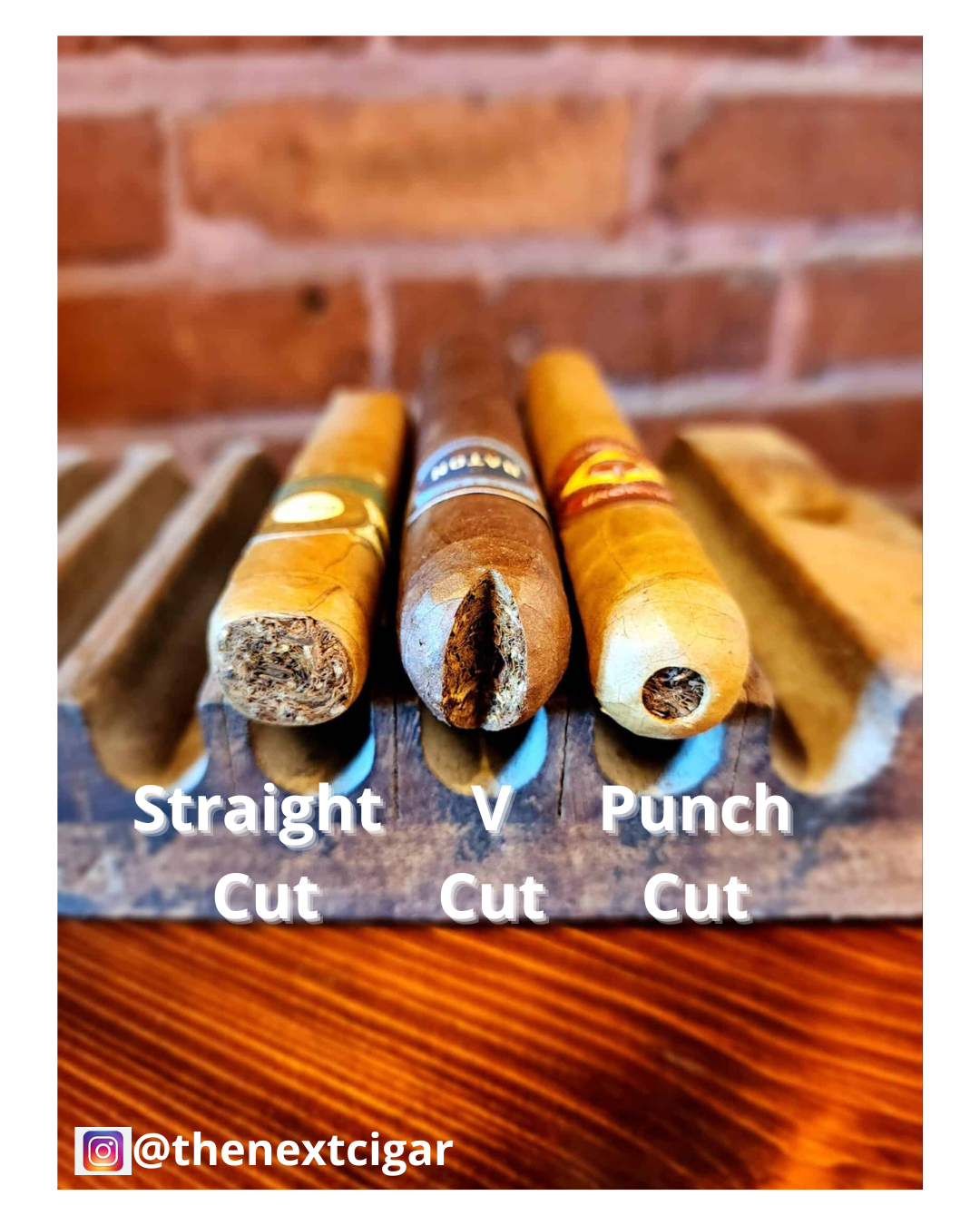
The cut is the most disrespected step in cigar smoking. People who’ll spend two hours debating the merits of a Cohiba Siglo VI versus a Padron Anniversary will hack the cap off with whatever’s in the kitchen drawer, then wonder why the draw is tight or the wrapper is splitting after twenty minutes. The cut decides everything that comes after it.
Here’s the working aficionado’s answer to the cut debate — anatomy, the three methods that matter, what to do with figurados, and how to rescue a cigar when you’ve left your cutter at home.
The anatomy you need to understand first
You can’t cut a cigar correctly if you don’t know what you’re cutting. The closed end you put in your mouth is the head. Sealing the head is a small disk of tobacco called the cap, applied by hand at the end of the rolling process. The cap holds the wrapper together. If you cut past the cap, the wrapper begins to unspool.
The line you’re hunting for is the shoulder — the curve where the cap ends and the rest of the cigar begins. On most premium cigars you can see it as a faint seam or a slight change in the leaf’s direction about 3 to 4 millimeters down from the very tip. Your job is to cut somewhere above that shoulder, not below it.
The rule: take off less than you think you need. You can always cut more. You can never put tobacco back.
The straight cut (guillotine)
This is the default for a reason. A clean guillotine slices off the top of the cap, exposing a full circular opening and giving you maximum airflow and smoke volume. Most premium cigars are blended assuming the smoker will use a straight cut, so this method delivers the flavor profile the blender intended.
The mechanics matter. A single-blade guillotine pinches the wrapper against the back wall of the cutter and produces ragged cuts. A double-blade guillotine — two opposing blades that meet in the middle — slices cleanly from both sides. The Xikar Xi2, with its lifetime warranty and self-sharpening surgical-steel blades, has been the working standard for a decade and runs around $50. The Colibri V-Cut and the Xikar XO both step up from there.
How to do it:
- Hold the cigar firmly in your non-dominant hand.
- Open the cutter and place the head into the slot, aiming to take 1/16th of an inch (about the thickness of a dime). The shoulder should remain intact.
- Close the blades in one quick, decisive motion. Hesitation produces jagged cuts that splinter the wrapper.
- Inspect the cut. It should be perfectly circular with no torn tobacco.
The straight cut works on every cigar with a ring gauge of 56 or less. On larger Gordos and Magnums, the wide opening can let too much air through and run the cigar hot — that’s where the V-cut earns its keep.
The V-cut (wedge cut)
The V-cut gouges a wedge-shaped channel into the cap rather than slicing the entire top off. The opening is smaller than a straight cut, which concentrates the draw and can intensify the flavor by funneling smoke over a smaller area of your palate. It also leaves most of the cap intact, which means more structural integrity for the wrapper as the cigar burns down.
This is the right cut for large-gauge cigars (58, 60, 64 ring), where a full straight cut creates an opening big enough to overwhelm the palate and overheat the foot. It also suits smokers who find that straight cuts deliver too much smoke per puff.
Modern V-cutters from Xikar and Colibri use an inverted design — the blade sits below the cigar and pushes up — which makes the cut depth consistent. Press the head into the cutter, apply firm even pressure, and snap it shut. Done well, you get a clean wedge with a satin-smooth interior surface.
The V-cut’s weakness: cheap ones leave a flattened, crushed channel rather than a sharp wedge. If you go this route, spend at least $40 on the cutter. Bargain-bin V-cutters are worse than no V-cutter at all.
The punch cut
A punch cuts a small circular hole in the center of the cap, leaving the rest of the cap and the entire shoulder intact. It’s the least invasive cut you can make and the most forgiving on cigar construction — you simply can’t unravel a wrapper with a punch.
The draw is tight and concentrated, which suits full-bodied cigars where you want to slow the smoke down and pull more flavor out of each puff. It also travels well: most premium butane lighters (the Xikar HP3, the S.T. Dupont MaxiJet) have a built-in punch in the base.
How to do it:
- Place the punch’s circular blade in the center of the cigar cap.
- Apply steady pressure while rotating the punch back and forth, like turning a key.
- Pull the punch out. The small plug of tobacco should come with it. If it doesn’t, the plug stays in the punch barrel — eject it before storing.
Two limitations. First, the punch only works up to about a 54 ring gauge — on a 60-ring Gordo, the small opening starves the cigar of air. Second, repeated punches accumulate tobacco residue inside the barrel, so wipe it out every couple of cuts.
Which cut, when
After roughly a thousand cuts, here’s the working logic:
- Straight cut for anything between 46 and 56 ring gauge. The default. If you only own one cutter, make it a double-blade guillotine.
- V-cut for Gordos, Magnums, and anyone who finds straight cuts too airy. Also a strong choice for box-pressed cigars where the squared head holds the V geometry better.
- Punch for travel, full-bodied cigars you want to slow down, and anyone whose hands aren’t steady enough to land a guillotine cleanly.
Opinions vary, but the editorial position here is straightforward: a good double-blade guillotine handles 90% of what most aficionados smoke, and the other two cuts are specialty tools for specific situations. If you’re picking a first cutter, buy the guillotine and grow into the others later. Our best cigar cutters of 2026 roundup breaks down the picks worth owning.
How to cut a torpedo or pyramid
Figurados — torpedoes, pyramids, belicosos — taper to a point at the head, which changes everything. Cut too low and you’ll expose more of the cap than you bargained for. Cut too high and the draw is choked.
The right approach is iterative.
- Start very small. Slice off just the tip of the point — about 2 to 3 millimeters, less than 1/8th of an inch.
- Take a cold draw. Before lighting, pull air through the cigar. You’re checking how much resistance you’re getting.
- Adjust. If the draw feels choked, take off another thin slice a millimeter or two further down the taper.
- Repeat until comfortable. A good draw should feel like sipping a thick milkshake through a straw — there’s resistance, but not effort.
The advantage of a figurado is that you get to dial in the draw. A smaller cut gives you concentrated flavor and a tighter pull; a larger cut opens it up. Once you’ve found the spot, light and smoke.
What if you don’t have a cutter
Bad position to be in, but not fatal. Three options, ranked.
A sharp pocket knife. A clean, sharp blade can shave the cap off in thin slices. Hold the cigar steady, work slowly, and aim above the shoulder. Pen knives or multi-tool blades work in a pinch.
Your thumbnail. Old Cuban move. Press your thumbnail into the seam of the cap and split it open with steady pressure, then peel back a small section. Works better than you’d expect on well-rolled cigars; ruins poorly capped ones.
Your teeth. Absolute last resort. Bite gently at the very tip of the cap and pull a thin sliver away with your front teeth. Bite too hard and you’ll mash the head into a wet pulp. Most aficionados would rather skip the smoke than do this.
What you should never do: use scissors (they crush the wrapper), kitchen knives (too long to control), or any serrated edge (they tear instead of slicing).
The cut is the start, not the finish
A perfect cut sets up the rest of the ritual. From here you toast and light the foot — and there’s a full method for that, covered in our guide on how to light a cigar. For the broader curriculum on what separates serious smokers from casual ones, see our ten cigar essentials every aficionado should master.
For the canonical reference on cutter design and the technique pages worth reading, Cigar Aficionado’s Cigar 101 section remains the deepest archive online.
The debate isn’t really about which cut is best. It’s about understanding what each cut does to the smoke, owning a cutter sharp enough to execute it cleanly, and committing to the motion. A confident guillotine with a $50 Xikar beats an apologetic V-cut with a $9 plastic gimmick every time. Pick your method, sharpen your tool, and stop cutting cigars like you’re afraid of them.