Lighting your first cigar is the easy part. Becoming an aficionado who can read a wrapper across a room, taste a Cuban from a Nicaraguan blind, and explain why one cigar burns cool while another runs hot — that takes ten things. None of them are mysterious. All of them compound. Master the cigar essentials below and you’ll have collapsed a decade of trial-and-error into a single read.
This is the working aficionado’s curriculum. It’s not exhaustive; it’s the version I’d hand a smart person who just bought their first humidor and asked, “what should I actually learn?“
1. Origin: seed, soil, and climate
Every cigar’s character starts before the tobacco was even cut. Three variables decide most of it.
Seed variety — Criollo, Corojo, Habano, and various hybrids each carry their own flavor signature regardless of where they’re planted. Criollo runs sweet and floral. Corojo brings spice. Habano splits the difference. A modern Habanos blend often uses two or three seed strains layered for complexity.
Soil — the calcium-rich red clay of Cuba’s Vuelta Abajo produces wrappers with no commercial equal. Nicaragua’s sandy volcanic loam, especially around Estelí, builds the dense, oily filler tobaccos that anchor most boutique blends. Dominican soils sit between, leaner and gentler. We covered the Cuban vs Dominican wrapper distinction in detail here — it’s the foundational divide in cigar geography.
Microclimate — altitude, humidity, and the day-to-night temperature differential (diurnal shift) shape leaf thickness and oil content. The volcanic highlands of Nicaragua and the river valleys of the Dominican Republic each give tobacco a fingerprint as distinct as a wine region.
2. Fermentation: chemistry, not magic
Fermentation is where harsh raw tobacco becomes the smooth, complex leaf you’ll eventually smoke. It’s not “letting it sit.” It’s a controlled biochemical process.
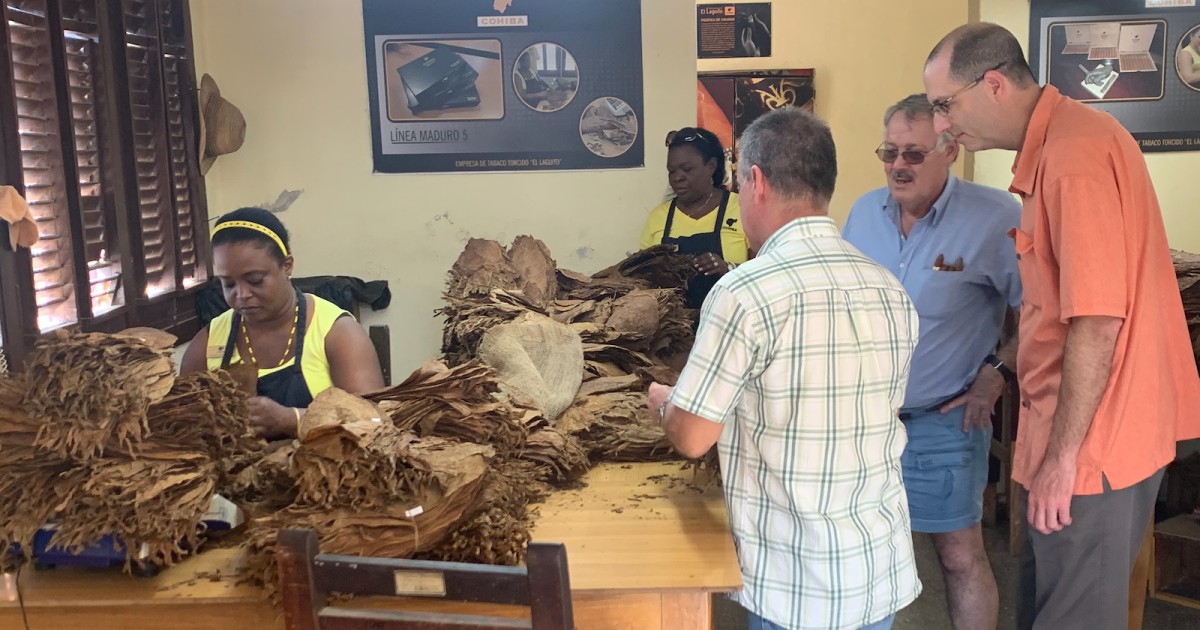
Leaves get stacked into massive piles called pilones, sometimes 2 meters tall. The pile heats itself — up to 70°C in the center — through microbial activity. Native yeasts and bacteria convert starches into simple sugars and aromatic esters. Ammonia and harsh nitrogenous compounds dissipate. Master fermenters turn the piles every few days, rotating leaves from the cool outer layers to the hot core. This goes on for weeks for fillers, months for premium wrappers.
The end result: tobacco that won’t bite, won’t taste of ammonia, and carries the depth of flavor that distinguishes a fine cigar from a cheap one. Bad fermentation can’t be fixed by aging later. It’s the most important production step nobody talks about.
3. Aging: time as a blender
Aging isn’t a marketing claim. It does measurable work on tobacco chemistry.
Pre-roll aging — finished leaves rest in burlap-wrapped bales for 2 to 5 years before they meet a roller. Sugars continue to develop. Harsh edges soften. Premium Habanos brands like Cohiba age their best wrappers for 3+ years before the leaf even enters the rolling room.
Post-roll aging — finished cigars age in cedar-lined rooms so the wrapper, binder, and filler “marry.” A fresh cigar tastes like three separate tobaccos awkwardly bundled. An aged cigar tastes like one integrated thing. Most premium production gets 6 months minimum. The Habanos Edición Limitada releases get years.
Home aging — your humidor continues this process. A box of fresh Habanos stored properly for 18 months becomes a noticeably different cigar than the same box smoked fresh.
4. Anatomy: wrapper, binder, filler
Three components, three jobs. Understanding each one is what lets you read a cigar before lighting it.
The wrapper is the exterior leaf — usually 60-70% of perceived flavor despite being maybe 10% of the tobacco by weight. Connecticut Shade is creamy and gentle. Maduro Broadleaf brings chocolate and coffee. Ecuadorian Habano adds bright citrus and pepper. The wrapper is also the most expensive component — primo wrappers cost 5-10× what filler tobacco does per pound.
The binder is the thick, elastic leaf that holds the filler together. You never taste it directly, but it controls how the cigar burns. A weak binder leads to canoe burns and unraveled wrappers.
The filler is the flavor core. A typical premium cigar blends three filler grades: ligero (top-priming leaves, full-bodied), seco (middle, smoother), and volado (bottom, mild, burns well). The blend ratio decides whether a cigar smokes mild, medium, or full.
5. Precision cutting: the gateway to flavor
The first cut decides everything that follows. Three formats matter.
Straight guillotine — the default. Slices the cap clean off. Best for cigars under 56 ring gauge.
V-cut — concentrates the draw without removing the entire cap. Better for larger cigars (Toros, Gordos, Magnums) where a full straight cut creates too much surface area and overheats the wrapper.
Punch — cuts a small hole in the cap rather than removing it. Restricts airflow, intensifies flavor concentration. Old-school move; works on most ring gauges but limits draw volume.
The right cutter does this cleanly. The wrong cutter crushes the wrapper, which then splinters during the smoke. Our best cigar cutters of 2026 roundup covers the picks worth owning — the Xikar XO for daily use, the Colibri V-Cut for larger gauges.
6. Lighting: ignition as ritual
A proper light sets the tone for the entire smoke. Three rules:
Flame — butane torch (clean, odorless, hot enough for even ignition) or long cedar matches with the sulfur burned off. Never candles, lighter fluid, or chemical-tipped matches. See our guide to lighting a cigar properly for the full technique.
Toasting — hold the foot above the flame at a 45° angle and rotate slowly. You’re warming, not lighting yet. 15-30 seconds until the edge glows uniformly.
Final ignition — bring the cigar to your lips, hold the flame an inch from the foot, and draw gently while continuing to rotate. The cherry should glow evenly across the entire surface.
For more on flame selection by use case, our best cigar lighters of 2026 roundup covers single-jet, double-jet, and tabletop picks.
7. The draw: pace, not power
A cigar is meant to be sipped, not smoked. The single biggest mistake new aficionados make is puffing too often and too hard. Both overheat the cigar and ruin the flavor progression.
Target pace: one puff every 45 to 60 seconds. The cigar’s cherry should be a dull glow between puffs, not a bright ember.
Temperature control — if the cigar gets hot to the touch on the foot or band, you’re puffing too hard. Set it down for a minute. The cherry will cool, and the flavor recovers.
Flavor progression — a well-made cigar evolves in thirds. First third: cedar, light pepper, the wrapper signature. Middle third: the blend’s deepest complexity, where the ligero in the filler asserts itself. Final third: stronger, sometimes nuttier or sweeter, sometimes harsher if the cigar’s burning hot.
8. Ash and burn management
Ash is a scoreboard. A long, firm ash holding together for 1-2 inches signals a well-rolled cigar burning evenly. A flaky ash that falls off in chunks signals either rushed fermentation or your puff pace running too hot.
Touch-ups — if one side of the foot races ahead of the other (canoeing), use your lighter to warm the slow side back to even. Don’t let canoes go uncorrected; they get worse as the cigar burns down.
Relights — if you’ve set a cigar down for more than 5 minutes and it’s gone out, that’s fine. Knock off the dead ash, retoast the foot briefly, and relight. The first puff after a relight may taste slightly burnt — smoke through it, the flavor recovers within 30 seconds.
9. Humidor science: a living ecosystem
Your humidor is a microclimate. Treat it accordingly. We covered this in depth in the silent keeper: proper cigar storage, but the headline rules:
Calibrate. Use a digital hygrometer (analog ones drift). 68-72% RH is the target range. 70°F (21°C) is ideal temperature.
Humidify properly. Boveda packs are the modern standard — calibrated, no maintenance, replaceable every 6 months. Distilled water in a sponge system works but requires more attention.
Rotate. Every few months, move cigars from the bottom of the humidor to the top. Humidity gradients exist even in a well-sealed humidor; rotation prevents some sticks from drying out while others over-humidify.
10. Etiquette: the social liturgy
Cigars are social objects. The unwritten rules separate aficionados from the loud guys at the airport lounge.
Don’t inhale. Cigars are tasted in the mouth and retrohaled (briefly through the nose), not pulled into the lungs. Inhalation makes you cough, ruins the flavor profile, and signals you don’t know what you’re doing.
Don’t rush. A premium cigar is a 60-90 minute commitment. If you don’t have the time, don’t light it.
Don’t bite. Hold the cigar between your fingers and bring it to your lips. Clamped between the teeth ruins the wrapper and looks coarse.
Pacing in a group — match the slowest smoker in your circle. Cigar etiquette is fundamentally about shared time. Our aficionado’s code on cigar etiquette covers the social conventions in more depth.
For the canonical reference on cigar terminology and the broader cigar literature, Cigar Aficionado’s introduction to cigars remains the authoritative source.
Master these ten and you’ve collapsed years of slow learning into a working framework. The rest is repetition — smoking widely, taking notes, and letting the palate calibrate itself across hundreds of cigars over a lifetime. Welcome to the craft.