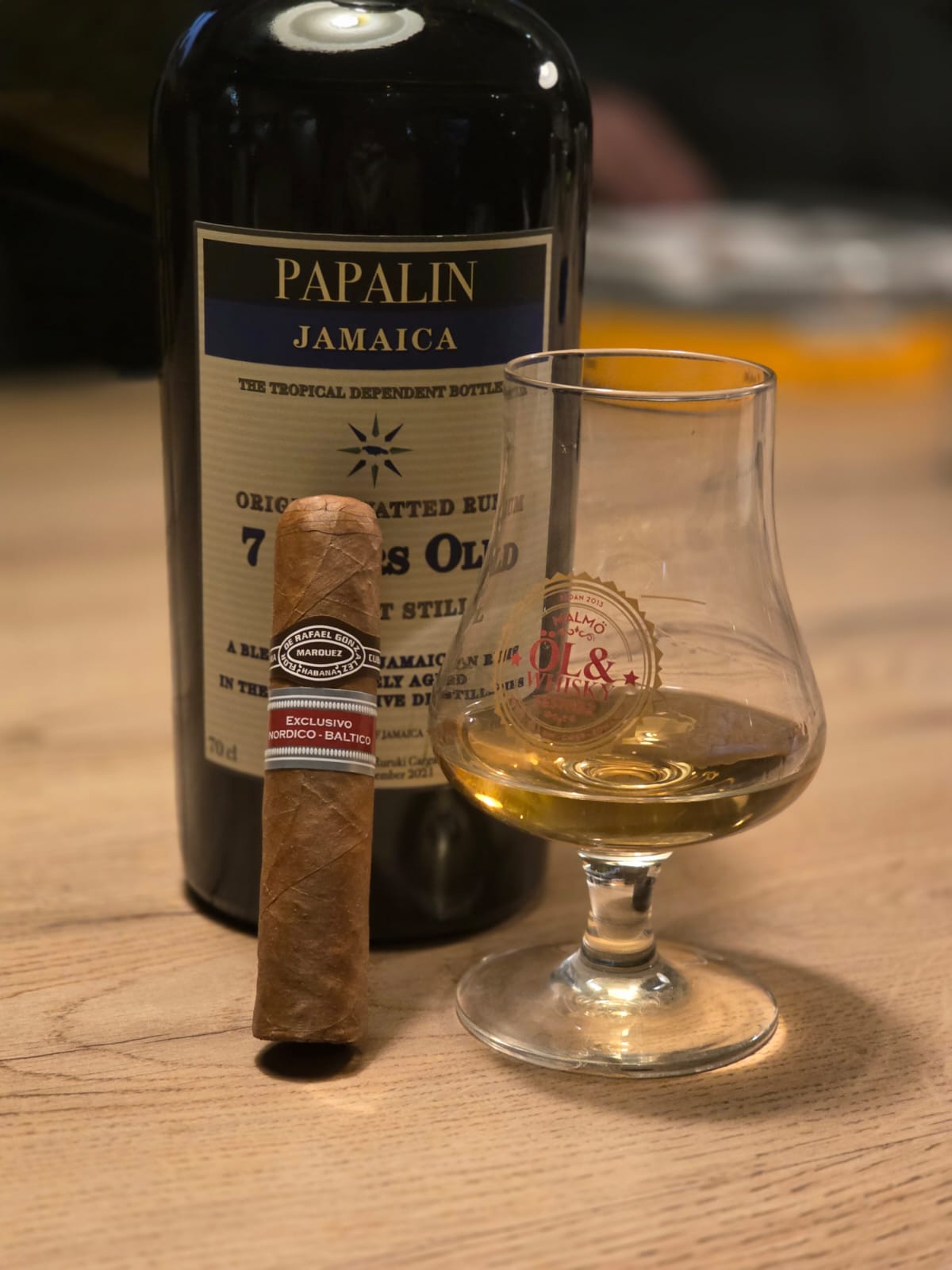
For most of the last century, the answer to “what should I drink with this cigar” was three words: Scotch, bourbon, coffee. Those are still good answers. They are not the only good answers anymore, and the second half of the question — what gear do I need to take this seriously — has shifted further in the last five years than in the previous twenty-five.
This is a working note on what has actually changed at the pairing end and at the gear end of the cigar ritual. No hype, no Bluetooth gadgets nobody uses after the first month. The pairings I keep coming back to and the accessories that have justified their replacement cost.
Mezcal and the case for agave spirits
Mezcal pairs with cigars almost too well, and the cigar industry has been slow to catch up. The smoke-on-smoke kinship — mezcal’s agave hearts are roasted in earth ovens, which produces the same phenolic compounds that show up in fire-cured tobaccos — is real and registers on the palate immediately. A Del Maguey Vida or a Vago Elote alongside a Mexican San Andrés-wrapped maduro is one of the better discoveries of the last decade.
Tequila is in the same conversation but operates differently. Reposados and añejos pull out the sweet, caramelised side of a cigar — try Fortaleza Reposado with a Padrón 1964 Maduro and the cigar finishes substantially sweeter than it would dry. Blancos, conversely, sharpen the spice. A Tapatío Blanco with a Nicaraguan ligero-heavy cigar (Joya Antaño, My Father Le Bijou) accentuates the pepper rather than mellowing it.
Editorial view: do not order a margarita with a cigar. The lime is a palate eraser. Drink the agave neat, room temperature, in a cattail glass or a small tumbler.
Gin: the unexpected pairing that actually works
The gin pairing reads ridiculous on paper and works in practice, with one specific caveat: it has to be the right gin. A juniper-forward London Dry (Tanqueray No. Ten, Sipsmith) will fight a full-bodied cigar to a draw. A heavier, herb-driven gin (Plymouth Navy Strength, Monkey 47, Hendrick’s at room temperature rather than chilled) finds a register that complements lighter Connecticut or Ecuadorian wrapper cigars without overpowering them.
Pair gin with the cigars you would normally pair with champagne: a Davidoff Aniversario, a Hoyo de Monterrey Epicure No. 2, a milder Dominican. Skip it for anything with serious ligero presence; the botanical structure cannot cope with the nicotine load.
Rum, agricole division
The pairing partner that has changed most for me in the last few years is Rhum Agricole — the Martinique-style rum distilled from fresh sugarcane juice rather than molasses. Where conventional aged rums (Diplomatico, Zacapa) bring a thick, syrupy sweetness that can muddy a cigar’s finish, agricole has a vegetal, grassy backbone that contrasts cleanly with the leaf. A Clairin Sajous from Haiti or a Rhum J.M. VSOP from Martinique alongside a Punch Princesa or a Romeo y Julieta Short Churchill is genuinely revelatory.
Aged Caribbean rums still work, especially with medium-bodied cigars. Avoid anything sweetened — most Venezuelan and Guatemalan rums are sucrose-dosed at bottling, which has the same flattening effect on a cigar that artificially sweetened spirits do.
What does not work, and why I keep saying it
The trends that should be dead but are not: cigar-and-cocktail pairings (the dilution and sweetness in a cocktail wipe out cigar nuance), cigar-and-craft-IPA pairings (hop bitterness fights tobacco bitterness, both lose), cigar-and-natural-wine pairings (the funk in a real natural wine swamps anything you light next to it). I would also retire the practice of dipping the head of a cigar in cognac, which the algorithm pushed hard around 2018 — it ruins the wrapper, distorts the burn, and tastes like furniture polish.
The pairings that do work share a feature: the drink has structure (acidity, oak, smoke, mineral) that the cigar can answer back to. Sweetness alone is not structure. Strength alone is not structure. What you want is a counterpart, not an echo.
Coffee, which deserves its own section
The single most overlooked pairing is filter coffee. Not espresso — espresso is a half-second pleasure and disappears under cigar smoke within a minute. A long, slow pour-over (Ethiopian Yirgacheffe, Kenyan AA, a washed Colombian) keeps changing in the cup for thirty minutes, which is exactly the duration of a cigar’s middle third.
Match the coffee to the cigar’s weight. A Honduran Capulin pair with a Padrón 1964 Anniversary is one of the cleanest pairings in the world. The fruit acidity in the coffee answers the cocoa-and-leather profile of the cigar without competing. Editorial view: this is the pairing I would teach a beginner first. It is more useful than knowing which Scotch goes with what.
The gear that has actually changed
Most of the “innovation” in cigar accessories over the last decade is marketing noise. A few categories have meaningfully improved.
Climate control humidors
The big shift since around 2018 is the move from desktop humidors with Boveda packs to small electric cabinets with active climate control. Brands worth looking at: Whynter (the CHC-251S is the entry point at about $400), NewAir, and at the top end the Aristocrat cabinets from American Heritage Industries, which are essentially refrigerator-grade humidor cabinets and start around $4,000.
The technical case for active climate is straightforward. Boveda packs work but cycle. A 69% pack pulls humidity from 75% down to 65% and back up — that cycling stresses wrappers over years, particularly for the long-aged Reservas you would want to hold for a decade. Active climate humidors hold a target RH within plus or minus one percent indefinitely. For a collection worth more than about $3,000 in cigars, the math justifies itself within two years.
The Bluetooth integration most brands now ship is largely useless. You will check the app twice and then forget. The internal hygrometer reading is what matters, and reading it through a glass door is faster than opening an app.
A deeper read on storage is in our piece on humidor practice.
Cutters, lighters, the rest
The functional upgrades worth making:
A Xikar XO double-blade guillotine ($90 range, lifetime warranty) replaces three lesser cutters over a decade. The S.T. Dupont MaxiJet ($180) is the lighter to own if you only own one — it ignites reliably at altitude, refills with standard butane, and the build outlasts most cigar accessories on the market.
The Les Fines Lames Le Petit knife (cigar cutter knife, around $100) is the better gift than another lighter for anyone who already has the kit. It cuts cleanly, looks correct in any room, and is the rare cigar accessory that gets better with use.
For travel: Xikar travel humidors with built-in humidification systems hold cigars at proper RH for two weeks in any climate, which is the actual problem you have on a long trip. The carbon-fibre five-finger cases are mostly for show — they protect the cigars but do not maintain humidity. Buy the brick form factor instead.
What I would not buy: any ashtray that costs more than $80 (the marble Davidoffs are gorgeous and excessive; a heavy ceramic from a kitchen-supply store does the same job), any cutter with more than two moving parts (more failure points), and any lighter that requires proprietary fuel.
The bigger picture
The cigar ritual has not so much expanded as opened. The Scotch-and-bourbon orthodoxy was never wrong — it was just smaller than the actual set of things that pair with leaf. The same is true on the gear side. The fundamentals — a humidor that holds RH, a cutter that cuts, a lighter that lights — have not changed in fifty years. What has changed is the precision available at every price point.
Spend the money where it earns its place. Climate control on your storage. A cutter you will own for life. A lighter that works on a windy terrace in Havana. Everything else is preference.
The point of any of this is to spend more attention, not more money, on the cigar in your hand.