Front page · Magazine · Cubans
Cubans
The Man Who Owned a Quarter of Habanos
Cuba never sold its half of Habanos. It sold the other half — and by 2025 the largest private shareholder in the company that sells every Cuban cigar on earth was a man now facing a possible death sentence in China. Here is what is documented, what is only reported, and what it is doing to the boxes on the shelf.
By Cristian Ortiz Suárez 11 September 2026 12 min read
For twenty-six years, the ownership of Habanos S.A. was a piece of trivia. Cuba owned half. A European tobacco company owned the other half — Spain’s Tabacalera, then Altadis, then Britain’s Imperial Brands after it bought Altadis in 2008. It was the sort of detail you mentioned once at a table and never thought about again, because it changed nothing about what was in the box.
It is not trivia any more. In October 2025 the United States indicted and sanctioned a Cambodian-Chinese businessman named Chen Zhi over a network of forced-labour fraud compounds in Southeast Asia. In January 2026 he was arrested in Cambodia and extradited to China. In July 2026 the European Union sanctioned him too. And the reporting that followed established what almost nobody in the cigar trade had understood until then: through a chain of holding companies running from the British Virgin Islands through the Cayman Islands to Hong Kong, Chen Zhi is reported to have been the largest private shareholder in the company that sells every legally exported Cuban cigar in the world.
By September 2026 the consequences had reached the shelf. Germany’s sole Habanos importer suspended operations. British retailers reported allocations cut roughly in half. Banks across Europe began quietly declining to handle the distributors’ money at all.
This piece sets out what is documented, what is reported by credible outlets but not confirmed by any primary source, and what remains rumour. Those three categories are kept apart deliberately, because much of what is circulating about this story mixes them.
What Cuba actually sold, and what it did not
Habanos S.A. is a joint venture. The Cuban state, through the tobacco conglomerate now known as Grupo Empresarial de Tabaco de Cuba — Tabacuba — holds fifty per cent. That half has never moved and is not in question. Everything that follows concerns the other half, and Cuba’s veto over what happens inside the company is untouched by it.
In April 2020, Imperial Brands announced it was selling its premium cigar business, and the sale split in two. The American side — Tabacalera USA, Altadis U.S.A., JR Cigar, Casa de Montecristo — went to a Delaware entity, Gemstone Investment Holding, for €185 million. The international side went elsewhere: the fifty per cent of Habanos S.A., the distribution holding company Altabana, the Tabacalera de García factory in the Dominican Republic, Flor de Copán in Honduras, and the importing companies that supply Cuban cigars to market after market. That package went for €1.04 billion, about $1.22 billion, to a buyer almost nobody in the trade had heard of: Allied Cigar Corporation, registered in Hong Kong. The deal closed at the end of October 2020.
Allied Cigar Corporation Limited had been incorporated on 10 March 2020, a month before the sale was announced. Its founding directors, according to Swedish court filings later reported by the Hong Kong outlet Dim Sum Daily, included Chiu King-yan — the chief financial officer of Suncity Group, the Macau casino junket operator — along with Chiu Ping-shun and Joyce Lam Wing-yan. Five weeks after the sale was announced, on 15 April 2020, the company’s shares were transferred to a Cayman Islands partnership called Allied Cigar Fund L.P. Three weeks after that the original Hong Kong shell was renamed Instant Alliance Limited. By November 2020 control had moved again, to Asia Uni Corporation of Hong Kong, whose sole shareholder was Supreme Treasure International Limited of the British Virgin Islands.
That is four changes of corporate clothing in eight months, around an asset worth a billion euros. It is the sort of structure that exists to make ownership hard to read, and it worked: for five years, it was not read.
The chain, as reported
The reporting that connected Chen Zhi to that structure is largely the work of the American trade publication halfwheel, together with Dim Sum Daily’s account of the Swedish filings. Their version runs like this: Chen Zhi wholly owns Simply Advanced Limited, a British Virgin Islands company; Simply Advanced holds 57.1 per cent of Allied Cigar Fund L.P.; Allied Cigar Fund owns the entire cigar portfolio bought from Imperial Brands. Running the percentages through to the end of the chain leaves Chen Zhi with an effective 28.55 per cent of Habanos S.A. — behind the Cuban state’s fifty, ahead of anyone else.
Two other shareholders are named in that reporting, entities called Digital Harvest and Horizon Glory. Who stands behind them has not been established by any source I could find.
It matters to be precise about the standing of these figures. The 28.55 per cent is not a number Habanos S.A. has published, nor Tabacalera, nor the Cuban government, none of which has commented publicly on Chen Zhi’s involvement at all. It comes from specialist journalists reading corporate registries and court documents. That is real work and the chain they describe is coherent and consistent across two independent outlets working from different document sets. It is still not a primary confirmation, and this publication is not going to present it as one.
What is confirmed at the level of government press release is everything about the man.
What Chen Zhi is accused of
On 14 October 2025 the United States Attorney’s Office for the Eastern District of New York unsealed an indictment against Chen Zhi, then 37, chairman of Cambodia’s Prince Group. The charges are wire fraud conspiracy and money laundering conspiracy, tied to Cambodia-based compounds where, prosecutors allege, trafficked workers were forced to run “pig butchering” cryptocurrency scams — the long-con romance-and-investment frauds that have taken billions from victims worldwide. The alleged conduct dates back to around 2015. The maximum sentence is forty years.
The same day, the Department of Justice moved to forfeit approximately 127,271 bitcoin, which it described as the largest forfeiture in its history — worth roughly $15 billion at the time of seizure. And the Treasury’s Office of Foreign Assets Control, acting jointly with the United Kingdom, sanctioned Chen Zhi, Prince Holding Group, Prince Bank and roughly 117 affiliated shell companies under the executive order aimed at transnational criminal organisations.
One detail deserves emphasis, because a great deal of loose writing has ignored it. The Treasury’s own designation list does not name Habanos S.A., Tabacalera, or Allied Cigar Corporation. The sanctions hit Chen Zhi and a long list of shells; Simply Advanced Limited, the BVI company at the head of the reported cigar chain, appears on the list, but the cigar companies themselves do not. The link between the sanctions and the cigar business is a link drawn by journalists, and later by banks and lawyers — not one asserted by the United States government in its own announcement. The practical effect on the trade has been severe anyway, for reasons that come down to how banks behave when a name appears anywhere upstream of a payment.
Chen Zhi was arrested in Cambodia and extradited to China in the first week of January 2026, confirmed by Phnom Penh and reported by Hong Kong Free Press, CNN and OCCRP on 7 and 8 January. On 6 July 2026, according to CiberCuba’s reporting of the case, he was formally charged in China with intentional injury by cruel means and with copyright infringement — charges that carry anything from ten years to life, or the death penalty. On 30 July 2026 the Council of the European Union added him and Prince Holding Group to its own sanctions list over human trafficking and scam-centre operations. As with the American designation, no cigar entity is named in the EU’s.
There is a separate name that keeps appearing alongside this story and should not be conflated with it. Alvin Chau, chief executive of Suncity Group, was arrested in Macau in November 2021 on illegal gambling and money laundering charges and was convicted and sentenced to eighteen years with a very large fine. His connection to any of this is that his group’s chief financial officer was reportedly among the founding directors of the Hong Kong shell that bought the Imperial assets. That is a connection worth noting and it is not an accusation about the cigar business. The dates given for Chau’s conviction differ between the sources I read — one says January 2023, another July 2024 — and I have not been able to reconcile them against Macau court records.
The money that came out
Between the purchase and the indictment, the business paid. Distributions from Tabacalera S.L. up to Allied Cigar Corporation are reported by halfwheel, sourced to Tabacalera itself, as €19.7 million in 2021, €33.4 million in 2022, €52.6 million in 2023 and €70 million in 2024 — more than €175 million in four years, on a rising curve. Dim Sum Daily gives a different total, €221 million since the acquisition, and separately estimates something on the order of HK$2 billion reaching Chen Zhi’s vehicle across five years.
Those two totals are not the same measurement and I am not going to pretend they reconcile. What both establish is the shape of it: a fast-growing stream of cash, flowing out of a business whose product is rolled by hand in Havana by people earning, according to a roller interviewed by Al Jazeera in April 2026, about twelve dollars a month.
What it has done to the cigars
This is the part that has reached the shelf, and it has moved quickly.
In Sweden, the company formerly called Habanos Nordic AB — now Elite Trading Scandinavia AB — came under scrutiny from Gothenburg authorities over business registration law, and by December 2025 that investigation had widened to the Chen Zhi connections. A new board member asked for more time, saying the group was working to remove him from the organisation entirely. Directors he had appointed resigned from the boards of the Tabacalera-associated companies.
In the United Kingdom, retailers began reporting from January 2026 that deliveries of Cuban cigars were arriving at roughly half of what had been ordered, with no official explanation from Hunters & Frankau, the sole British importer — in which, according to cigars-connect, Chen Zhi is an indirect shareholder. Imports of VegaFina, made at the sanctions-exposed Tabacalera de García, were reported blocked outright. Hunters & Frankau declined to comment. For context on what a rationed British market means: Cuban cigars were 77 per cent of the UK cigar market by value in 2024.
In March 2026 Nicotine Insider reported that European banks had begun cutting off or restricting Cuban cigar distributors — Laguito 1492 in the Benelux countries, Fifth Avenue in Germany, Austria and Poland, and Tabacalera SLU in Spain, which is the exclusive Habanos distributor for the company’s second-largest market. The mechanism here is not a legal prohibition. It is de-risking: a compliance officer sees a sanctioned name several layers above an account, calculates the cost of being wrong about American extraterritorial reach, and closes the account. Nobody has to be found guilty of anything for the money to stop moving.
On 4 September 2026 — one week before this was written — Fifth Avenue Products Trading GmbH emailed German retailers to say it was suspending operations: no new orders, no shipments, citing restrictions on its banking relationships as part of a compliance and sanctions review tied to one of its shareholders. Fifth Avenue is 80 per cent owned by Altabana, Habanos’ own distribution arm, with the Swiss Villiger group holding the rest. It is the sole importer for Germany, Austria and Poland. Germany was Habanos’ fifth-largest market by value in 2024.
Meanwhile the attempt to simply sell Chen Zhi’s stake and be rid of the problem has run into three separate walls. Interpath Advisory was appointed provisional liquidator over thirty British Virgin Islands companies on 9 January 2026, with court orders barring asset sales without authorisation. A Chapter 15 cross-border insolvency petition was filed in New York on 8 April 2026, where on 23 April Judge Martin Glenn granted protection that preserves the assets rather than permitting their sale. And on 4 May 2026 Hong Kong authorities froze HK$8.94 billion covering fifteen of those thirty entities, Allied Cigar Corporation’s bank accounts among them. Objections were filed in the New York case on 22 May with a ruling scheduled for 9 June; I could not establish what that ruling decided, and anyone telling you the ownership question is settled should be asked for their source on that hearing.
A name does circulate as the likely buyer — Renovaire Group, reported to hold the other 42.9 per cent of Allied Cigar. Cigars-connect, which reported it, flags it as never officially confirmed. Treat it as rumour.
What this is not
It is worth being clear about several things this story does not establish, because the gaps are being filled with invention.
It does not mean Cuba sold its cigars to a criminal enterprise. Cuba sold nothing; a European company sold its own half, twice removed, and the Cuban state’s fifty per cent and its control of production never moved.
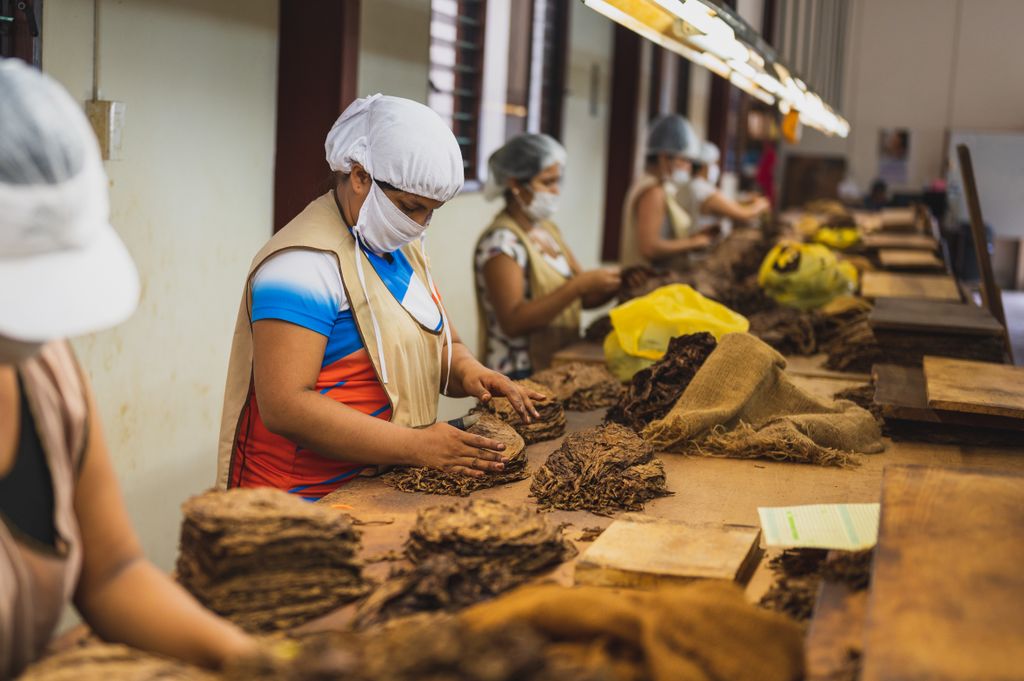
It does not mean the cigars themselves are compromised. The leaf is grown in Pinar del Río, cured in Cuban barns, rolled in Cuban factories by Cuban torcedores. Nothing in the ownership chain touches the tobacco.
And it does not explain the cancellation of the Festival del Habano. The twenty-sixth Festival was postponed in February 2026 and cancelled outright in July. Habanos’ own statement attributes it entirely to Cuba’s fuel and power crisis — lost Venezuelan oil, aviation fuel shortages, airlines cutting flights, hotels closing. No source I have seen connects that decision to the ownership affair, and the two should not be welded together just because they happened in the same year.
Where it leaves a smoker
Practically: if you are in Germany, Austria or Poland, the official supply has stopped for now, and nobody has said for how long. In Britain, expect allocations to stay thin. Across Europe, expect distributors to be slower, more cautious, and occasionally unable to take payment — not because the cigars have run out, but because banking has.
There is a temptation, in a market that suddenly looks scarce, to buy from whoever still has stock. That is precisely the condition counterfeiters wait for. Buy from the shops you already trust, check what you are given, and if a price looks impossible, it is.
The longer question — whether Habanos emerges from this with a new private partner, with Cuba taking the half back, or with the joint venture restructured altogether — is genuinely open. Anyone who tells you otherwise in September 2026 is guessing.
On sources. The criminal case, the sanctions, the arrest and the extradition are documented in filings and press releases from the US Department of Justice, the US Treasury, the Council of the European Union, and wire coverage from CNN, OCCRP and Hong Kong Free Press. The ownership chain connecting Chen Zhi to Habanos S.A. comes from investigative reporting by halfwheel and from Swedish regulatory filings reported by Dim Sum Daily; it has not been confirmed by Habanos S.A., Tabacalera or the Cuban government, none of which has commented. Market consequences are reported by cigars-connect, Nicotine Insider, CiberCuba and Diario de Cuba. Revenue and market-share figures are from Habanos S.A.’s own annual announcements. Where sources conflict — on the Chau conviction date, on the dividend totals, on the exact closing date of the 2020 sale — the conflict is stated above rather than resolved by picking one.
We do not sell Cuban cigars and we take nothing from anyone who does. If you find an error in the above, write to us and we will correct it in public.
From the tools
All of them →Read next
The archive →
Cuba exported about 50 million cigars in 2024, against 94 million in 2018. The festival is cancelled, the grid has colla…
Three Behike sizes, one signature wrapper. The 52 is the most-stocked and €349/cigar. The 54 is the all-rounder at ~€420…
Buy a box of Cohiba Robustos in Germany for €1,930 and ship to the UK? Expect £350–£500 in UK Tobacco Products Duty + VA…