Front page · Magazine · Cubans
Cubans
Fewer Cigars, Costlier Cigars: Where Habanos Goes From Here
Cuba exported about 50 million cigars in 2024, against 94 million in 2018. The festival is cancelled, the grid has collapsed six times this year, and a Siglo VI costs 178 per cent more than it did in 2022. This is what the numbers actually say about the next few years — and what they don't.
By Cristian Ortiz Suárez 11 September 2026 8 min read
Habanos S.A. has never earned more money than it does now. It has also never made fewer cigars in living memory. Both of those things are true, they are the same strategy, and understanding why is the whole of the argument about what happens next.
The revenue line first, because it is the one Habanos publishes. Turnover was $568 million in 2021, dipped to $545 million in 2022, then jumped 31 per cent to $721 million in 2023 and a further 14.7 per cent to a record $827 million in 2024. That is the last figure that exists. The 2025 number has never been announced, because the venue where Habanos announces it — the press conference at the Festival del Habano — did not happen. Anyone quoting you a 2025 revenue figure is making it up.
Now the volume line. Cuba exported roughly 94 million cigars in 2018. In 2024 it exported about 50 million. In June 2025 Marino Murillo, the head of Tabacuba, set a target of 70 million exported out of about 80 million produced — a target, not a result, and one set against a year in which the national electricity grid collapsed entirely six times.
Nearly a hundred million cigars became fifty, and revenue went up sixty per cent. That is not an accident of the crisis. It is a decision taken in 2022, when Habanos introduced what it called a new global pricing standard and some prices doubled or tripled overnight. The company stopped selling expensive premium cigars and started selling luxury goods.
What that decision has cost the buyer
The clearest way to see it is one cigar over five price lists. The Cohiba Siglo VI in Spain was €37.80 in January 2022. It was €100 by January 2024 and €105 in the 2025-26 list — a rise of 178 per cent in four years. The Lanceros went from €35.30 to €96.60 over the same period. The Behike 52 went from about €55 in early 2022 to about €230 in early 2026.
There is a sign that the pace is easing. The January 2026 Spanish list rose by an average of 3.83 per cent across some 350 products, against about 5 per cent in 2025 and 8.23 per cent in 2023, and several of the top-tier lines — the Behike BHK, Montecristo Línea 1935, Partagás Línea Maestra, Romeo y Julieta Línea de Oro — took no January rise at all. The most expensive single line in that list, the Cohiba Ideales, sits at €550 a cigar.
A slowing rate of increase is not a reduction. The doubling has happened; 2026 simply adds less on top of it.
Why there are fewer cigars
Three things, compounding.
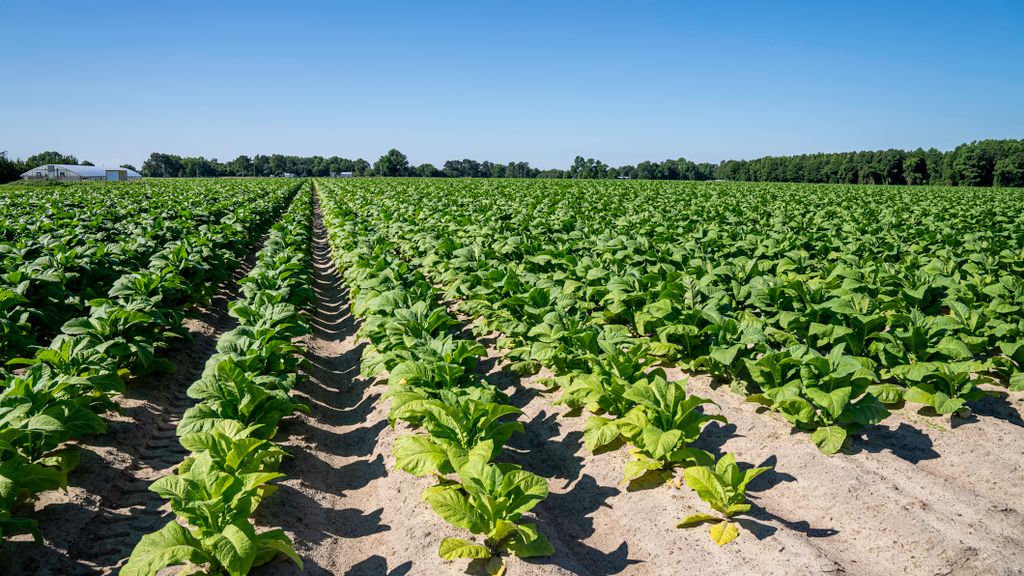
The first is the weather, and it is the one that is genuinely improving. Hurricane Ian crossed Pinar del Río in September 2022 and destroyed roughly ninety per cent of the region’s curing barns — somewhere near ten thousand casas de tabaco. A cigar cannot be made from leaf that has nowhere to hang. Planting for that season fell to under 13,000 acres against a plan of 28,000, and Granma called it one of the smallest crops anyone could remember. Hurricane Idalia came through almost the same track in 2023 while the rebuilding was still going on. Recovery has been real but partial: the 2024-25 season planted 10,500 hectares, double the post-hurricane floor. The target for 2026-27 is 14,623 hectares in Pinar del Río and about 20,000 nationally. The binding constraint named in that planning is still barns — 6,175 operational against 7,876 needed.
The second is electricity, and it is getting worse rather than better. Cuba’s grid failed nationally six times in the first eight months of 2026, according to reporting around the August collapse. About half of Pinar del Río’s tobacco fields depend on electrified irrigation. In January 2026 the US administration moved against oil shipments to the island, including pressure on Venezuela, which had supplied something like sixty per cent of Cuba’s crude; by March, Al Jazeera reported, a single Russian tanker of 730,000 barrels had arrived — roughly a week of power. The 2025-26 planting target was revised down to 12,152 hectares as a result.
The third is people, and it is the hardest to reverse. The president of the Cigar Association of Canada told Al Jazeera in April 2026 that some factories were running with as little as twenty per cent of their former workforce. A roller with sixteen years at the bench described earning about twelve dollars a month with no increase since the pandemic, in a country where an estimated quarter of the population has emigrated since COVID. Barns can be rebuilt in a season. A torcedor who has left for Madrid does not come back because the fertiliser arrived.
Where the cigars are going
The market map has shifted east and it has shifted upward. In 2024, China was Habanos’ largest market by value at 27 per cent of revenue, ahead of Spain, Switzerland, the United Kingdom and Germany. The regional split was Europe 54 per cent, Asia-Pacific 24, the Americas 12, Africa and the Middle East 10. A year earlier Asia-Pacific had been 21 per cent and Europe 56. The direction is unmistakable even if the annual steps are small.
That shift is the price strategy working exactly as intended. A market that treats a box as an appreciating asset absorbs a doubling; a market that treats a cigar as a Friday evening does not. The cost is a European and Latin American customer base being slowly priced into occasional buying, which is precisely what the trade press has spent three years reporting anecdotally.
Set against that, the scale of what Habanos cannot reach at all: the United States imported roughly 258 million handmade cigars from Nicaragua in 2025, 94 million from the Dominican Republic and 75 million from Honduras. Any one of those numbers is larger than Habanos’ entire global output.
The American question
The embargo holds. The 2020 rule banning Americans from importing Cuban cigars and rum — including cigars bought legally in a third country — is still in force as of September 2026, and no rollback has been announced. What exists instead is atmosphere: reports that Cuba has signalled openness to Cuban-American investment and property ownership, and a belief in parts of the trade that talks are under way. No primary confirmation of those talks could be found, and the organisations reporting them say plainly that nobody expects an imminent lifting.
It is also worth noticing the direction of actual policy in 2026, which was not toward opening. The oil measures in January were a tightening, and their effect ran straight through the grid into the irrigation pumps of Vuelta Abajo.
If the market did open, the constraint would immediately become supply. A company exporting fifty million cigars cannot meaningfully serve a market that buys four hundred million a year. The first American year of a lifted embargo would look less like abundance and more like the worst allocation shortage in the history of the product.
The festival, and what its absence means
The twenty-sixth Festival del Habano was scheduled for 23–27 February 2026. It was postponed on 14 February and cancelled outright in July — only the third cancellation in its history, after the COVID years. Habanos’ own explanation is entirely about the country’s circumstances: lost Venezuelan oil, no guaranteed aviation fuel, international carriers cutting Cuban routes, hotels closing. No date for 2027 has been announced; the organising committee said it would keep watching how the situation develops.
Beyond the missing party, the cancellation removed the industry’s single annual disclosure event. No revenue figure, no market ranking, no production number, no stated strategy for the year. For a company whose transparency was already limited to one press conference a year, the loss matters: the trade is now reading the business through distributors’ order books instead of through anything Habanos says.
What has continued is the product calendar. The Quai d’Orsay Concordia was announced as the first Edición Limitada of 2026, a Fonseca Du Nord Regional Edition was slated for Canada, and Habanos committed to marking Cohiba’s sixtieth anniversary with an event in London on 7 October 2026. The releases keep coming. The explaining has stopped.
What to actually expect
I will keep this to what the figures support.
Supply stays tight through 2027. The barn shortfall alone caps the 2026-27 crop before weather or fuel is considered, and the leaf planted this winter reaches a box two to three years from now. Nothing anyone decides in 2026 can add cigars to 2027.
Prices keep rising, more slowly. The 3.83 per cent January rise is the company signalling it knows the elastic has been stretched. There is no sign of a reversal, and nobody in the trade is predicting one.
Allocation becomes the story instead of price. The interesting question in 2027 is not what a Siglo VI lists at but whether your shop is sent any. That has already begun in Britain, where deliveries have been running near half of orders, and in Germany, Austria and Poland, where the importer suspended operations in September 2026 over a banking and sanctions review — a separate crisis, covered in detail in our piece on the ownership affair, and one that lands on the same shelves.
The New World keeps taking the volume. Not because it has won an argument about quality but because it can deliver a box on a Tuesday at a price a regular smoker can repeat.
And the things that would change the picture — the embargo lifting, the grid stabilising, a resolution of the ownership fight, a genuinely large harvest — are all possible and none is forecastable. Where a number does not exist, this publication would rather say so than print one.
On sources. Revenue and market figures are from Habanos S.A.’s own annual announcements for 2021 through 2024, as carried by halfwheel and Cigar Aficionado; no 2025 figure has been published. Harvest and planting figures come from cigars-connect, Cigar Journal and Cigar Aficionado’s hurricane reporting. Export volumes, workforce, wage and irrigation figures come from Al Jazeera’s April 2026 long-form report and from Cigar Inspector’s account of Tabacuba’s 2025 export target. Price trajectories are from the Spanish list prices as reported by halfwheel and The Late Smoke. Grid collapses are from Al Jazeera, CNN, NPR and local reporting across 2026. Festival cancellation details are from Habanos’ own statement as reported by halfwheel and Cigar Aficionado. US import volumes for competing origins are from Cigar Journal. Reports of US–Cuba talks are labelled above as unconfirmed because they are.
From the tools
All of them →Read next
The archive →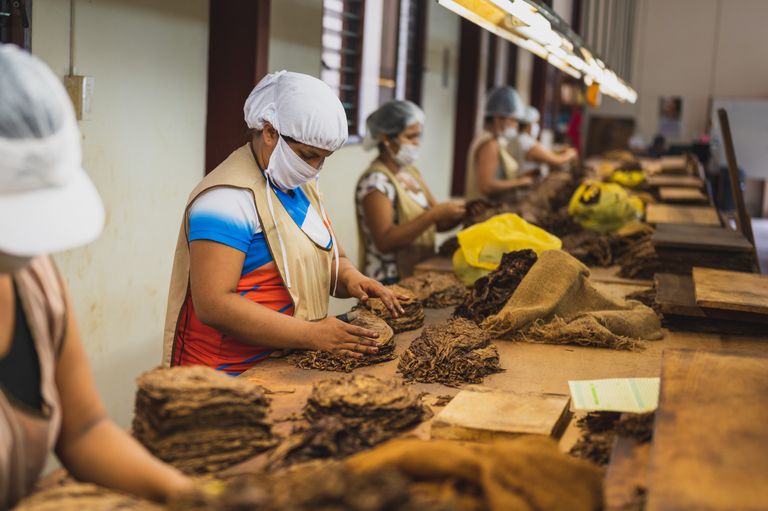
Cuba never sold its half of Habanos. It sold the other half — and by 2025 the largest private shareholder in the company…
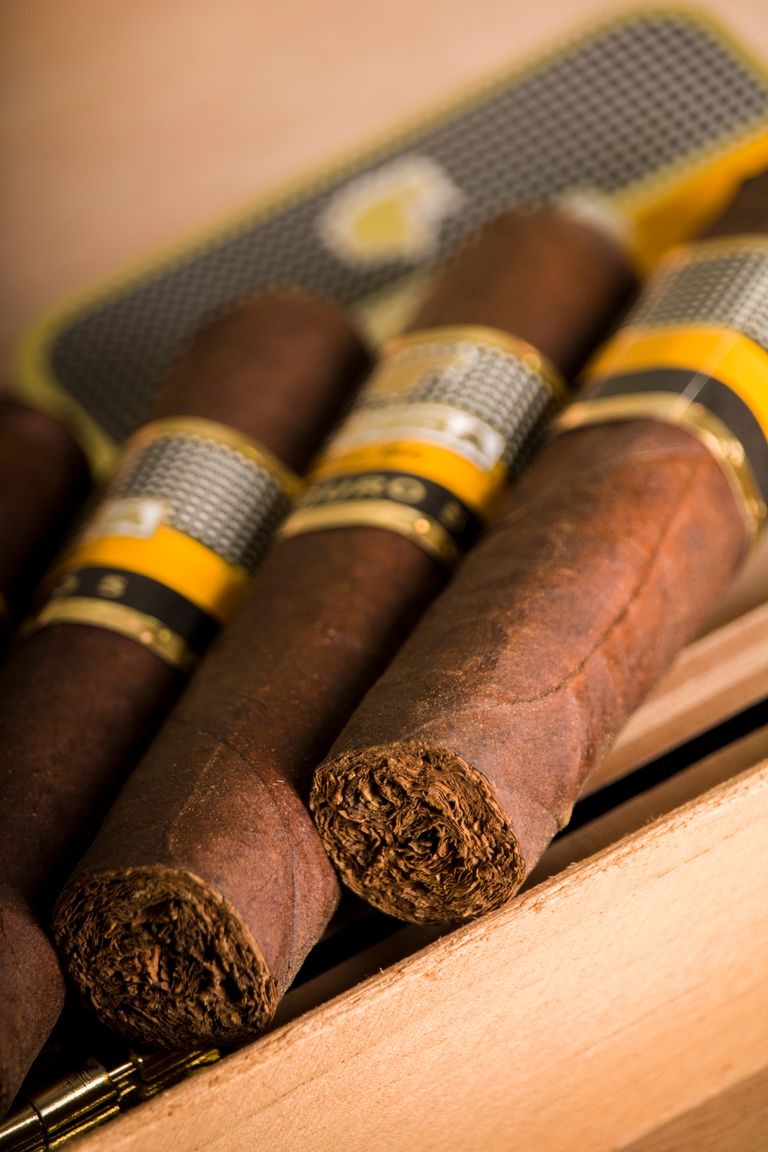
Three Behike sizes, one signature wrapper. The 52 is the most-stocked and €349/cigar. The 54 is the all-rounder at ~€420…
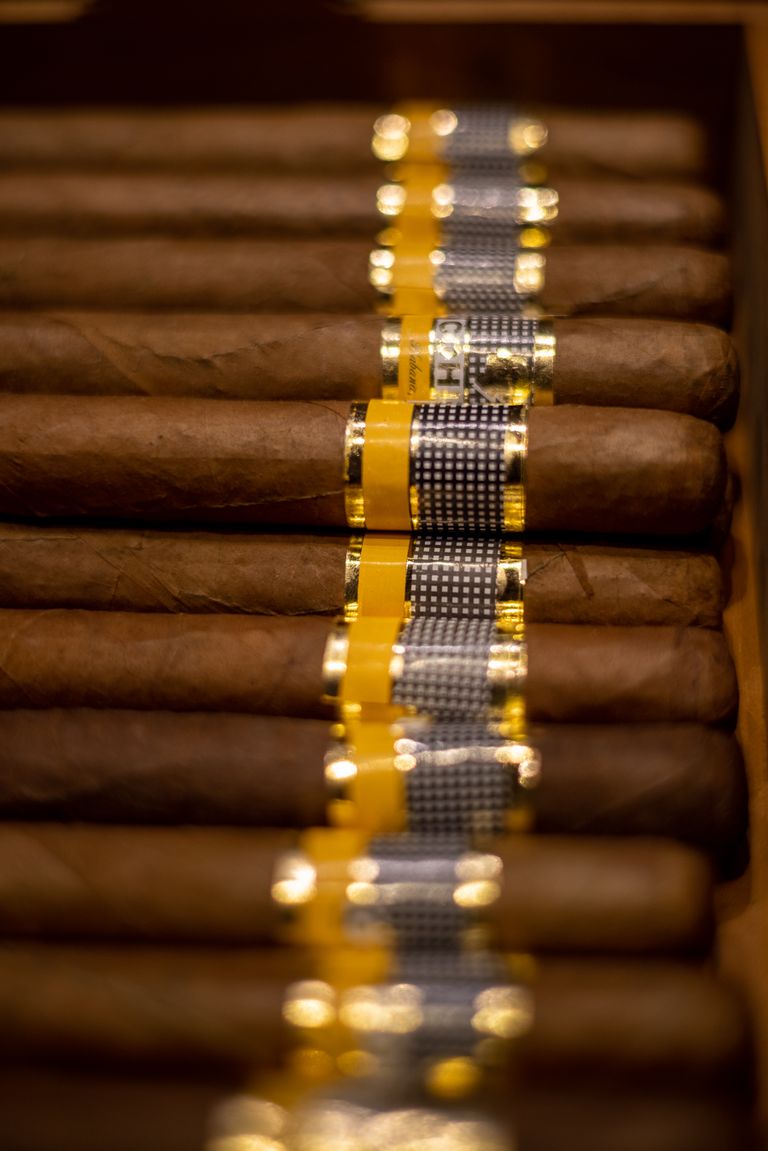
Buy a box of Cohiba Robustos in Germany for €1,930 and ship to the UK? Expect £350–£500 in UK Tobacco Products Duty + VA…